By Hakan Okçal
Nikol Pashinyan’s election victory on June 7, his third in a row since 2018, confirmed the strong desire of the Armenian people to live in peace and prosperity in a functioning democracy as part of the Western World.
Pashinyan’s pro-Western and pro-EU Civil Contract party ran against Russian-Armenian oligarch Samvel Karapetyan’s Strong Armenia party and former President Robert Kocheryan’s Armenia Alliance, both supported by Moscow.
The election was regarded as a referendum on Pashinyan after Armenia’s defeat against Azerbaijan, which resulted in the reunification of Nagorno-Karabakh with Azerbaijan. Against nationalistic fervor for the loss of Karabakh and pressure from Russia, Pashinyan’s Civil Contract won almost 50% of the votes cast, which gives it a majority in the parliament. Its pro-Russia opponents together could only get around 33%.
Pashinyan’s vote dropped somewhat from previous elections and he could not achieve a super majority for a constitutional referendum. Still, his victory was an expression of support for his pro-Western policy and his efforts to forge peaceful relations with Azerbaijan and Turkey.
A REALIST
Pashinyan is a realist when it comes to relations with the West.
Rather than pursuing NATO membership that would antagonize Russia, he steered his country towards the European Union. But he also stayed close to Trump, a move that Putin could not openly oppose. One product of this approach was the Trump Route for International Peace and Prosperity (TRIPP) framework agreement signed by the two countries in 2025 for a trade and energy route that will connect Azerbaijan and Turkey through the Zangezur Corridor and free Armenia from dependence on Iran.
He has also been realistic on the Karabakh issue. When the war was lost, he understood that nationalist policies to reclaim Karabakh would not bring it back but only increase Armenia’s dependency on Russia, blocking a path to the West. He took the right decision: accept the realities and avoid a new war.
Pashinyan and Aliyev negotiated a peace agreement and initialled it in Washington under Trump’s supervision. However, this agreement has not been signed due to Azerbaijan’s insistence that Armenia remove a reference to Karabakh as part of the Armenian homeland. Azerbaijan has declared that until the Armenian constitution is duly amended, it will not sign any peace deal, technically continuing the war.
AND FOR ANKARA
For Turkey, such problems hamper good relations with Armenia. In the same independence declaration referred to in the Armenian constitution, there is a reference to “Western Armenia” which clearly indicates Turkey’s eastern territories. On top of that, the Armenian coat of arms bears an image of Mount Ararat, the mountain inside Turkey. But Turkey has never demanded that Armenia amend its constitution or change its coat of arms before establishing diplomatic relations. Turkey froze its decision to establish diplomatic relations with Armenia and closed its land border when Armenia attacked Azerbaijan and occupied a large chunk of its territories including Karabakh.
Another stumbling block in Turkey-Armenia relations has been Armenia’s emphasis on genocide claims under previous governments. Pashinyan declared that genocide claims against Turkey will no longer be a priority. Having said this, no one should expect Armenia to relinquish those claims. Equally, no one should expect Turkey to accept them. This matter should be removed from bilateral relations and left to the discretion of the two peoples. As the late Hrant Dink always said, the two peoples will find the best remedy.
Now that all occupied Azeri territories have been liberated, there should be no obstacle for Turkey to open its land border and start negotiations on establishing diplomatic relations. For that, a peace and friendship agreement needs to be signed in which both parties reciprocally recognise their present borders and support each other’s territorial integrity. Such an agreement would supersede any reference to territory in the Armenian independence declaration.
Pashinyan pledged before the elections that he would let the people decide on constitutional changes through a referendum if he had the necessary votes in parliament. Whether these amendments include Azerbaijan’s desired changes is not clear. They could well be geared towards a more democratic constitution that would bring Armenia closer to the EU without satisfying Azerbaijan. Since Pashinyan failed to achieve a super majority, a constitutional referendum has become less likely although not impossible. However, if Azerbaijan eventually does not sign the deal on the grounds that Armenia could not amend its constitution, that would be a huge setback.
In that case, Turkey should improve its relations with Armenia on its own, rather than becoming a prisoner of Azerbaijan’s internal politics. In the wake of the elections, both Turkey and Armenia took steps in the right direction such as allowing direct civilian flights including the flag-carrier Turkish Airlines, restoration of the historic Ani Bridge, and removing red tape in transit trade. Now these steps must be crowned with the long overdue opening of the land border.
However, there were changes to the Turkish Foreign Ministry’s post-election press release (see elsewhere this issue) and the text called on Armenia to take bolder steps for regional peace, instead of calling on both parties to work together. That tends to make one less optimistic.
Armenia wants to be part of the West. No matter what the AKP government does, Turkey is still a part of the West and will remain so. Therefore, it must embrace Pashinyan’s reconciliation efforts before it is too late and open the path towards a better future for the two peoples.
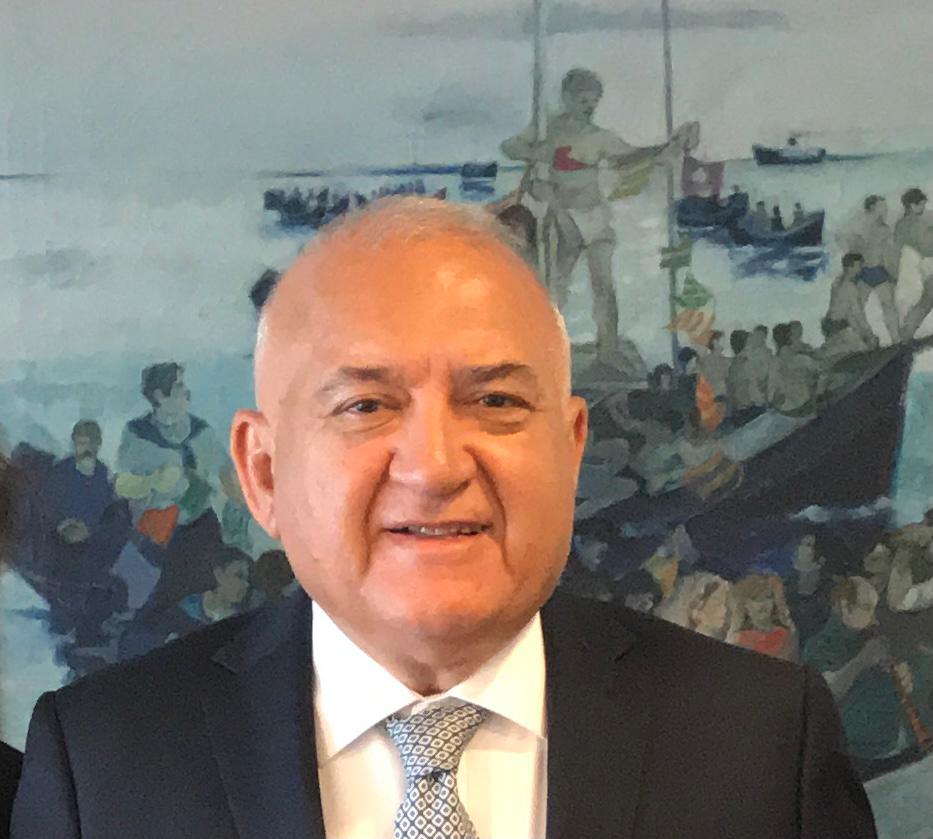
* Hakan Okçal is a retired Turkish ambassador. He joined the Foreign Ministry in 1978 and served in various diplomatic posts, including NATO, Bonn, Berlin, and as Consul General in Komotini. He was Turkey's Ambassador to Abuja, to Skopje, and later to Seoul. After retiring in 2018, he lectured on diplomacy at universities for five years and is currently a member of the Ankara Policy Center (APM).