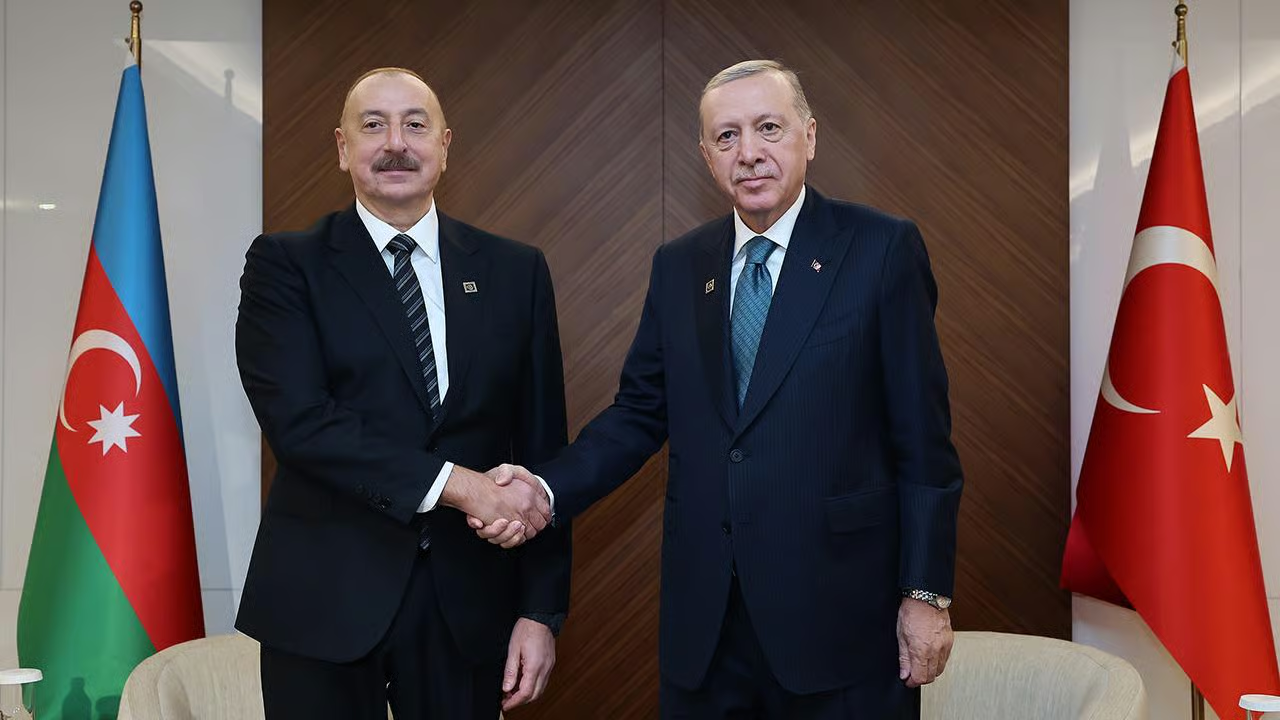
Turkish President Recep Tayyip Erdoğan and Greek Prime Minister Kyriakos Mitsotakis met in Ankara on the 30th anniversary of the Kardak (Imia) crisis, serving as a reminder that the fundamental disagreements that nearly brought the two NATO allies to war 30 years ago remain unresolved.
However, a fundamental difference distinguishes the climate between today and 1996: communication between Ankara and Athens has not deteriorated.
Expectations for the visit were deliberately modest. No progress was expected, particularly on long-standing disputes in the Aegean and Eastern Mediterranean. As anticipated, there was no real progress from the talks. Nevertheless, the mere fact that the visit took place under a “positive agenda” framework highlighted a shared commitment to maintaining dialogue in spite of long-standing disagreements.
Mitsotakis, who last visited Turkey in May 2024, held his 10th meeting with Erdoğan since taking office. Both leaders reiterated their view that disputes in the Aegean and Eastern Mediterranean “can be resolved,” though no specific roadmap or timeline was announced.
FOCUS ON TRADE AND ECONOMIC COOPERATION
Economic cooperation emerged as the most tangible outcome of the visit. Officials set a new target of increasing annual bilateral trade from $7 billion to $10 billion. Seven agreements were signed in areas including investment, finance, ferry services, earthquake preparedness and cultural cooperation.
The two leaders also co-chaired the sixth meeting of the High-Level Cooperation Council, which had not convened for nearly two years. During Erdoğan’s visit to Athens in December 2023, the sides had introduced a visa facilitation scheme allowing Turkish citizens visa-free travel to several Greek islands.
At a joint press conference, Erdoğan said Turkey’s positions on disputes in the Aegean and Eastern Mediterranean had been conveyed and acknowledged that resolving the issues is complex. He stated that solutions are possible based on international law and stressed “the need for constructive dialogue and political will.”
Mitsotakis, while acknowledging the existence of disagreements, expressed hope for eventual resolution. Referring indirectly to Turkey’s long-standing declaration that any Greek extension of its territorial waters to 12 nautical miles would constitute a casus belli, he said, “I believe the time has come for all threats regarding our relations to be removed.”
Erdoğan emphasized the importance of Turkish-Greek cooperation for European security and said Turkey’s participation in European defense initiatives, including the SAFE mechanism, would serve the interests of both countries.
Concluding his remarks, Mitsotakis addressed the Turkish president as “Tayyip Bey” and invoked the legacy of Eleftherios Venizelos and Mustafa Kemal Atatürk, who laid the foundations of modern Greek-Turkish rapprochement in the 1930s.
“Fate has made us residents of the same neighborhood,” Mitsotakis said. “We cannot change this geography, but we can form an alliance. With a sense of responsibility, we can work for the peace and prosperity of our countries.”
FOREIGN MINISTERS’ JOKE
Notably, Mitsotakis’ closing remarks were not included in the transcript of the press conference published on the website of Turkey’s Directorate of Communications.
The overall atmosphere remained cordial. Greek Foreign Minister George Gerapetritis and Turkish Foreign Minister Hakan Fidan joked to reporters that they had “killed ourselves in there” when asked about their meeting, before expressing satisfaction with the discussions, Greece’s Kathimerini reported.
NATO COMPLAINT OVER GREEK-ISRAELI TIES
Meanwhile, tensions persist beneath the surface. Ankara, reportedly uneasy over growing Greek-Israeli cooperation, has raised concerns within NATO.
According to Barçın Yinanç, a columnist for Turkey in Depth, Ankara has complained to NATO allies, questioning whether one NATO member can form what it perceives as an alliance against another member.
Yinanç wrote in the T24 news website that it remains unclear how NATO officials responded, adding rhetorically whether they might have replied that “Israel is not an adversary of our alliance.”
She also noted that the relationship developed between Erdoğan and U.S. President Donald Trump has caused unease in Greece. Barçın wrote in her column that Greek officials are aware that telling Trump to “forget Turkey and trust me and the Greek Cypriot side” would only make him laugh.
Journalist Murat Yetkin wrote that the visit was significant largely because it took place, showing that the two NATO allies could meet under a positive agenda and send a message to “friends and adversaries, particularly the U.S.”
Reports in the Greek press ahead of the trip said that in both capitals, U.S. President Trump’s second term had made rapprochement more important. According to those news assessments, the leaders’ main objective was to signal internationally that Greece and Turkey remain committed to dialogue, regardless of the lack of concrete outcomes.
Retired Ambassador Cengiz K. Fırat also wrote in Turkey in Depth before the visit that, particularly regarding exploitable natural resources in the Eastern Mediterranean, it could be assumed that neither side was prepared to escalate tensions to a level that would prompt President Trump to step in and “solve another crisis.”