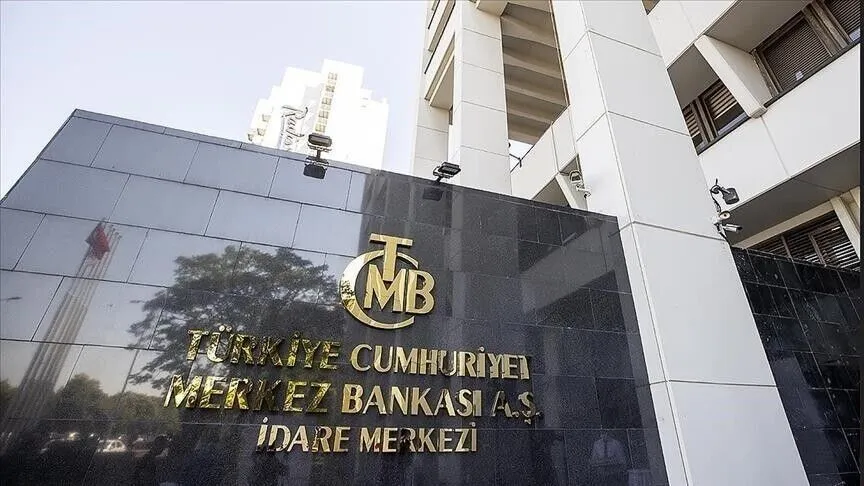
The central bank kept its benchmark policy rate unchanged at 37% on April 22, meeting the expectations of most analysts.
The decision comes following intensified criticism of both the bank and Finance Minister Mehmet Şimşek, 59, from the business world and media outlets close to the government.
The Monetary Policy Committee opted for stability despite some market speculation that a 300-basis-point hike might be necessary to curb stubborn inflation. Median expectations from economists place the year-end policy rate at 33%. The next meeting of the committee is scheduled for June 11.
GROWING PRESSURE FROM PRO-GOVERNMENT CAMP
The decision was delivered against a backdrop of aggressive headlines from pro-government media attacking the economic program. The Yeni Şafak newspaper — traditionally a staunch supporter of the government— has led the charge, accusing Minister Şimşek of failing to meet his promises.
In a front-page report on April 20, the newspaper criticized the gap between government targets and economic reality.
“In September 2023, Mehmet Şimşek promised to reduce 2026 inflation to 8.5%,” the report stated. “The inflation for 2026 will be 29% at the most optimistic estimate. This means a 350% deviation occurred between the target and the reality. This rate of deviation is a world record.”
On the morning of the interest rate announcement, the same outlet turned its sights on Central Bank Governor Fatih Karahan, 44. Under the headline 'Interest Rates Await Karahan’s Arbitrary Decision,' the paper accused Karahan of making decisions without market consensus.
İŞBANK CEO ZIGZAGS BUT EMPHASIZES REVISION
The assault by pro-government media came days after Hakan Aran, the CEO of İşBank, Turkey’s largest private bank, said the government should abandon its inflation program.
On April 16, Aran suggested that the current anti-inflation program, characterized by high interest rates and tight fiscal policy, had run its course and should be abandoned.
Aran argued that sticking to the program would only yield a minor difference in inflation outcomes while placing a massive burden on the real sector.
After the backlash, Aran later clarified that he did not advocate for a total collapse of policy but rather a 'dynamic revision' based on changing global conditions. However, his initial comments were widely interpreted as a sign that the private sector’s patience with high borrowing costs is wearing thin.
POLITICAL MOTIVES BEHIND CRITICISM
Analysts pointed out that attacks on Şimşek and Karahan are often proxies for grievances that cannot be directed at the Presidency. Journalist Murat Yetkin said the critics are carefully avoiding targeting the true source of executive power in the 'presidential system.'
'Can Mehmet Şimşek do anything on his own?' Yetkin asked. 'Who holds all the executive power regarding the economy? Does it belong to Şimşek? No. It belongs to President Erdoğan.'
Yetkin said: 'There is an attitude of 'Let’s not touch Erdoğan. Let’s not be seen as criticizing Erdoğan, so let's criticize this Şimşek instead.''
Nuray Babacan, a writer for Nefes newspaper, reported that a faction within the ruling AKP is expanding its efforts to replace the current economy team with their own associates.
“Even those who do not look at it through a utilitarian lens have started to ask, ‘Is there a problem with this program?’ after being frequently confronted with reactions from the base and the problems of the business world,” Babacan wrote. She said that internal party pressure is mounting for a total revision of the program.
According to Babacan, the AKP may be prioritizing political survival over long-term economic health: 'In such a plan, the aim will not be to fix the economy, but to create arguments that will convince the citizen until the ‘election bridge’ is crossed. This means printing money during the election period.'
RISK OF A REVERSAL
Despite the domestic pressure, international observers warn that removing Şimşek would be a step backward for Turkey’s financial credibility.
Economist Timothy Ash warned that shifting back to a policy of lower rates and a weaker lira would trigger a systemic crisis. He argued that such a reversal would cause inflation to skyrocket and return Turkey to a period defined by extreme systemic risks.