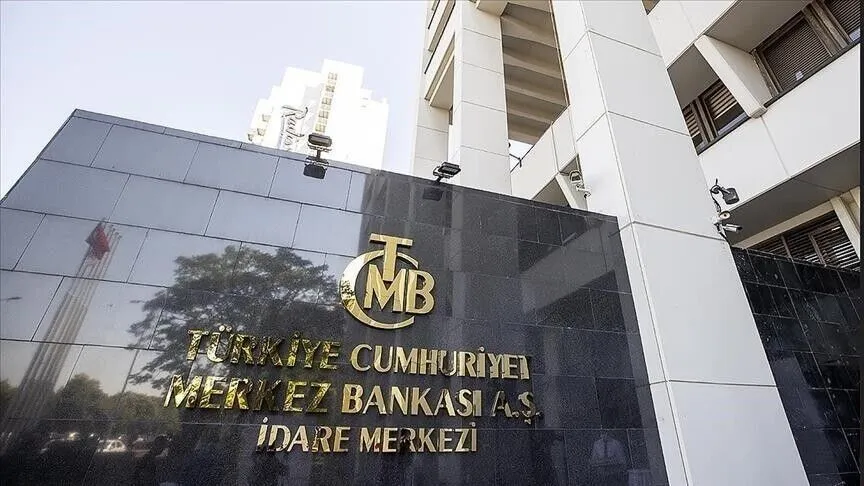
The central bank has resumed one-week repo auctions after a nearly six-month pause, an operational shift that effectively lowers market funding costs and paves the way for official policy rate cuts.
The central bank suspended repo auctions on March 1 to mitigate financial volatility following the outbreak of the US/Israel-Iran war. That forced banks to make use of the overnight lending rate of 40% rather than the 37% one-week rate.
On Aug. 23, the bank announced the reopening of one-week repos, holding a 1 billion lira auction at an average yield of 37.09%, pulling effective funding costs back toward the official 37% benchmark rate.
Former Central Bank Chief Economist Hakan Kara described the move as an operational step to bring effective interest rates down from 40% to the official 37% target. 'Depending on domestic demand and reserve conditions, official interest rate cuts could begin in October,' Kara said.
He added that a potential 300-basis-point rate cut by the bank would have quick reflections on money market yields, deposit rates, and commercial loans — stimulating the stock and housing markets and supporting domestic demand without impacting foreign exchange rates at this stage.
EXPECTATIONS FOR RATE CUTS MOUNT
The timing of the decision reflects growing pressure from the real sector and improved financial indicators. Market participants now anticipate the central bank to begin formal monetary easing in the coming months.
JPMorgan economist Fatih Akçelik projects 100-basis-point rate cuts in October and December, bringing the policy rate to 35% by year-end. Citigroup analysts and domestic market experts also expect the benchmark rate to reach 35% by the end of 2026.
Academic Erhan Aslanoğlu said that returning to standard funding mechanisms will influence commercial lending and deposit rates.
'The decline in Turkish lira yields may slightly accelerate exchange rate movements compared to the past six or seven months,' Aslanoğlu said. 'However, this will remain a manageable trend without uncontrolled spikes.'
CDS DROPS TO 6.5-MONTH LOW
Following the central bank's liquidity decision and easing Middle East tensions, Turkey's five-year Credit Default Swap (CDS) fell to 217 basis points, reaching its lowest level since Feb. 18. Concurrently, two-year benchmark bond yields dipped below 40% for the first time since July 2.
Analysts attribute the declining risk premium to global market dynamics alongside domestic policy normalization.
'The primary driving factors are global conditions, falling oil prices, and the partial calming of conflict,' said Özlem Derici Şengül, founding partner at Spinn Consulting. 'Expectations of upcoming central bank rate cuts, combined with strengthening reserves, have positively contributed to the country risk premium.'
Seda Yalçınkaya Özer, strategy manager at Yatırım Finansman, said that shifting funding costs from 40% to 37% acts as a concrete step toward normalization.
'Pulling funding costs back toward the 37% benchmark rate serves as a tangible step away from extreme tightening,' Özer said. 'It reintroduces the possibility of a September rate cut to the market agenda.'