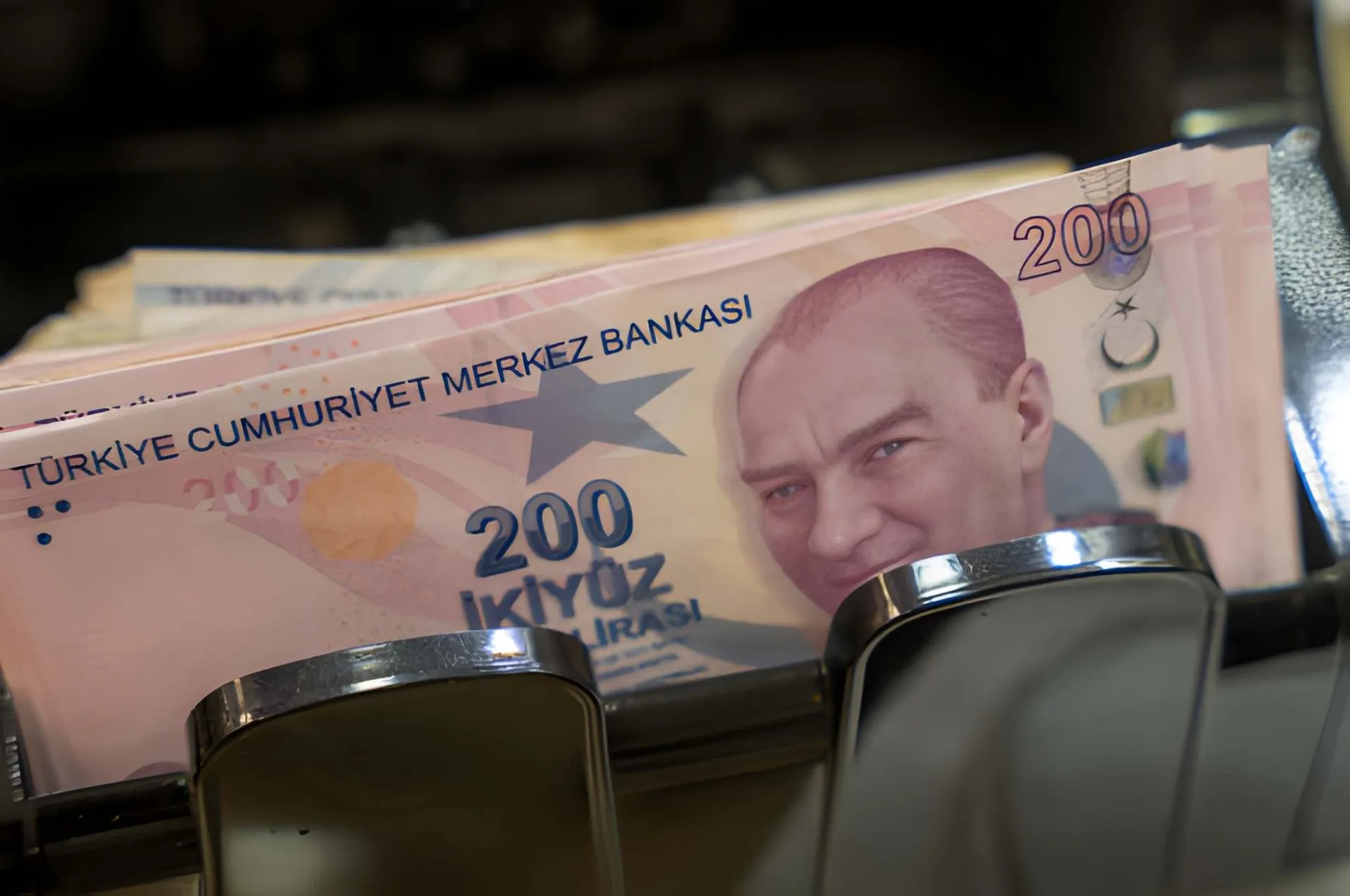
Central Bank Governor Fatih Karahan has opened the door to a cut in the tax on lira deposits to keep savings in the local currency as interest rates fall. But the numbers suggest the move would do little to protect savers' returns, while costing the budget dearly.
Karahan told Anadolu Agency that alongside the main policy rate and other tools, authorities could adjust withholding taxes on lira bank deposits to keep local savings attractive.
“Our tight monetary policy stance and macroprudential framework are keeping demand for Turkish lira assets strong. Should it become necessary to support demand for the Turkish lira, we can deploy our macroprudential and liquidity tools, primarily our main instrument, the policy rate.” Karahan said. “In coordination, additional steps to support the Turkish lira, such as withholding tax regulations, may also be taken.”
Stressing that the underlying inflation trend dropped to 24% in October, down from roughly 30%, Karahan said inflation could go up in November due to food prices. Annual inflation stood at 29.8% in October.
Currently, individuals pay a 17.5% withholding tax on interest earned from lira deposits held up to six months and 15% tax for deposits up to one year. An analysis by financial platform Fintables shows that cutting this tax rate has strict limits compared to expected interest rate cuts.
Markets expect the central bank to slash its policy rate by 1 percentage point to 35% on December 10, and roughly 7.1 percentage points over the next 12 months. Fintables calculated that each 1-point cut in the deposit tax only offsets about 0.45 to 0.50 percentage points in deposit rate drops. Even cutting the tax down to 5% would not fully compensate savers for the expected wave of rate cuts.
Tax cuts also carry a heavy fiscal price tag. Fintables estimated that every 1-point reduction in the short-term deposit tax costs the state budget roughly 29 billion liras ($850 million) annually. Lowering the tax rate to 10% would erase the entire primary budget surplus projected for 2026.
Data further suggests that recent spikes in foreign currency demand are not driven by ordinary citizens abandoning the lira. Central bank figures show that local companies accounted for nearly all of the $8.3 billion rise in domestic foreign currency deposits over five weeks ending Nov. 13, alongside capital outflows from foreign investors.