In one of the country’s largest financial scandals, payments to victimized fund investors began and priority will be given to small investors, according to statements from officials.
The government assured markets that taxpayer money would not be used to cover private financial losses. This is the first concrete recovery phase for at least 455,000 investors.
Payments began on Oct. 8 as the government assured markets that the state budget would not be used to cover private financial losses.
Finance Minister Mehmet Şimşek also said that 17 investment funds have been liquidated, with payouts for 43,000 investors transferred. “As of today, the funds belonging to 43,000 fund participants have been transferred to their respective banks,” Şimşek said.
Speaking in parliament on Oct. 7, Vice President Cevdet Yılmaz said that the domestic financial system faces no systemic risk and emphasized that Turkey's macroeconomic fundamentals remain solid. The government pledged that liquidation payouts will draw strictly from existing fund assets and seized illicit holdings rather than Treasury funds.
Besides the initial compensations for more than 40 thousand investors, the Capital Markets Board (SPK) plans to execute interim principal payments of up to 1 million liras ($20,380) per investor.
Also, the ruling AKP is drafting a 10-article bill to facilitate investor reimbursements and regulate fund liquidations in the wake of the financial crisis. The legislative proposal is expected to be formally submitted to parliament soon. The details of the procedure and the mandates of the institutions overseeing funds subject to liquidation will be defined under the 10-article temporary bill.
The payout rollout marks the first concrete recovery phase for the retail investors affected by the liquidation of in total 131 investment funds across seven portfolio management companies. The crisis, which triggered severe drops across Borsa Istanbul, has driven foreign investment to historical lows while forcing state institutions to step in to maintain liquidity.
GOVERNMENT PLEDGES ZERO TREASURY EXPOSURE
Government officials tried to reassure the public that taxpayers would not pay the bill for high-risk private fund failures.
'No Treasury resources will be used for private losses incurred during this process,' Yılmaz told parliament. 'State guarantees present in the banking system do not apply to the fund market, particularly high-risk hedge funds. Payouts will draw primarily from resources currently held by the funds themselves.'
The vice president added that the 131 funds facing liquidation represent just 4.6% of Turkey's total fund count and 7.7% of total portfolio value, describing the crisis as isolated.
'Revenues generated from the sale of seized or confiscated assets will be transferred to a recovery account and used for payments,' Yılmaz added. 'Once regular and extraordinary liquidations are completed in October, the vast majority of affected individuals will have received their full payments.'
BORSA ISTANBUL LOSES ONE FIFTH OF ITS VALUE
The fund collapse triggered a sharp sell-off across Turkish equities, wiping out roughly one-fifth of market value and driving international capital out of domestic markets.
Former Central Bank Chief Economist Hakan Kara highlighted the sharp retreat of foreign capital. 'Government bonds and equities held by foreigners relative to our national income have fallen to their lowest level in the last 20 years,' Kara said.
Market analysts trace the downturn back to late August, when regulatory adjustments exposed fictitious transactions designed to artificially inflate stock prices within specific fund portfolios.
'There was no external development that could have triggered a sell-off in investment funds,' economic columnist Abdurrahman Yıldırım said. 'By the end of September, the decline had reached severe proportions, melting away nearly $117 billion in equity market value—a drop of about one-fifth of total stock market capital.'
Yıldırım said that forced liquidations following SPK intervention, combined with a lack of timely information, generated widespread fear and severe liquidity bottlenecks across trading desks.
OPPOSITION CALCULATES $17 BILLION RESERVE DRAIN
Opposition parties and independent market watchers dispute official claims of zero public cost, pointing to backdoor interventions by public institutions to stabilize financial assets.
According to a compilation by the main opposition Yeni Party, state interventions carried a heavy indirect price tag over the past month. Central bank net reserves fell by $17 billion over four weeks due to market support measures, while foreign currency deposits grew by $8 billion as domestic dollarization accelerated. At the same time, sovereign risk premiums (CDS) rose 34.75 basis points and dollar bond yields climbed to 7.53%. Non-performing loans jumped over 7% in a single month, as total listed corporate market capitalization shrank 23.9%.
State institutions used tools such as the Sovereign Wealth Fund (TVF) to execute buy orders for benchmark BIST 30 equities to stem market losses. Observers said that central bank net reserves declined by more than $10 billion through indirect stabilization efforts following the outbreak of the scandal.
CENTRAL BANK AND MARKET ANALYSES
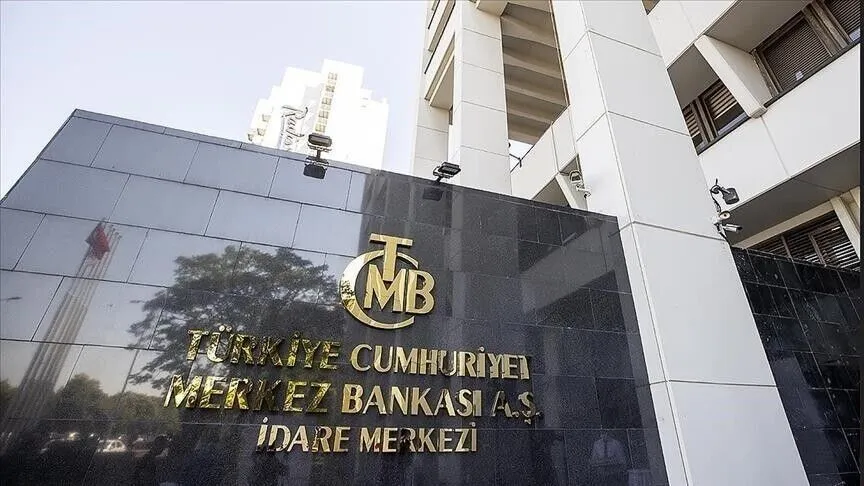
Central Bank Governor Fatih Karahan confirmed significant capital shifts out of fund products but said that capital largely remained within the domestic banking sector.
'Exits from the money market and similar funds have been substantial, but these outflows directed overwhelmingly into bank deposits,' Karahan said, adding that shifts into deposits exceeded 800 billion liras. He confirmed that central bank net reserves, excluding swaps, stood at $40 billion as of Sept. 25.
Meanwhile, brokerage firm Gedik Yatırım released a comprehensive liquidity analysis examining 129 liquidated funds available on the TEFAS trading platform. The report said that illiquid assets account for 58.6% of portfolio holdings -representing nearly 334 billion liras- among the audited funds.
Gedik Yatırım added that illiquidity is concentrated unevenly within specific firms. When three massive funds belonging to Tera Portföy are excluded from the sample, the proportion of illiquid assets drops sharply to 23.2%.
SPK directives require payments of up to 1 million lira to investors of four portfolio management companies, -Tera, Pusula, Atlas, and Hedef- that account for 605 billion liras in fund assets, representing 93% of all assets currently undergoing liquidation.
MAJOR INSTITUTIONS EXPRESS CONFIDENCE
Meanwhile, five major institutions issued statements expressing confidence in Turkey following the fund crisis.
S&P Global Ratings said it does not expect downside pressure on Turkey’s credit rating if the developments remain isolated, while Fitch signaled it does not anticipate systemic risk. Moody’s assessed the credit risk stemming from the crisis as limited, while FTSE Russell expressed confidence by maintaining Turkey’s Advanced Emerging Market status and refrained from placing the country on a watch list. JPMorgan said it expects turmoil in Turkey’s fund sector to drag on economic activity only slightly in the fourth quarter of 2026.
INTERNATIONAL DIMENSION EXPANDS
The international scope of the fund crisis has raised new questions about foreign investors’ exposure to the companies involved.
After Bloomberg reported on Sept. 30 that Norges Bank Investment Management, which manages Norway’s sovereign wealth fund, held investments worth about $208 million in 10 Turkish companies linked to the investigation, Turkish newspaper Türkiye columnist Kubilay Gülbek wrote that Citibank was involved as well.
Gülbek said Citibank had purchased about $80 million worth of shares through eight companies linked to Tera Yatırım in what he described as manipulative transactions.
“Tera’s owner Emre Tezmen, after learning that two major funds were automatically accumulating shares on the stock market through algorithmic trading systems, created inflated funds under the guise of crisis-focused companies. Tezmen also established contact with companies affiliated with the two major fund organizations and enabled those organizations to automatically purchase shares held in the inflated funds,” Gülbek said.
“The prosecutor’s investigation revealed that Norway’s sovereign wealth fund purchased $120 million worth of securities subject to manipulative trading through 10 different companies, while Citibank purchased $80 million worth through eight companies.”