In a historic development for Turkish-American relations, the long-standing legal battle over Iran sanctions involving the Turkish state lender Halkbank has been settled. The U.S. government said the result will curb support for Iran.
The bank announced on March 9 that it signed a Deferred Prosecution Agreement (DPA) with the U.S. Attorney’s Office for the Southern District of New York, effectively ending a case that has strained diplomatic ties for nine years.
Under the terms of the agreement, Halkbank accepted no criminal guilt and will not pay any judicial or administrative fines. This outcome aligns with Turkey's long-term goal of resolving the case without a financial penalty. The U.S. Department of Justice said that dismissing the case serves the 'national security and foreign policy interests of the United States.
On March 11, a federal judge paused the criminal case for 90 days, giving the bank time to demonstrate compliance with the DPA. If Judge Richard Berman approves the agreement, it would remove a long-standing irritant in U.S.-Turkey relations, which have been on their warmest footing in decades since Trump's return to the presidency.
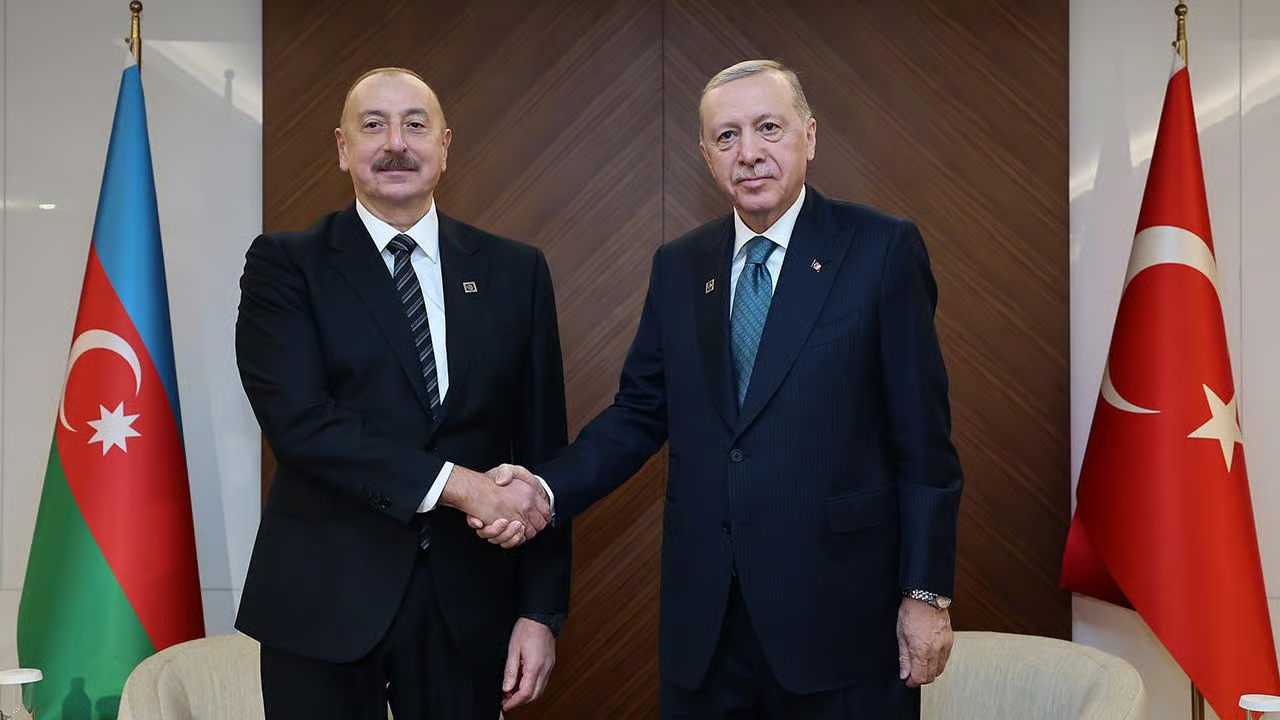
Earlier, Turkey had reportedly proposed a $100-million settlement during a meeting between President Recep Tayyip Erdoğan and U.S. President Donald Trump at the White House in September 2025.
THE 'SWORD OF DAMOCLES' LIFTED
The case began in 2019 when U.S. prosecutors accused Halkbank of taking part in a multi-billion-dollar scheme to evade sanctions on Iran. Prosecutors alleged the bank used front companies in the UAE, Turkey, and Iran to transfer approximately $20 billion in restricted funds. They claimed the bank disguised oil revenues as gold and used fake food shipment documents to legitimize the transfers. Halkbank denied all charges.
For years, the case hung over Turkish-American relations like the 'Sword of Damocles,' affecting Turkey's risk perception in international finance.
The resolution follows a signal given by Erdoğan in October 2025. He had said that during discussions at the White House, President Trump told him, 'The Halkbank problem is over for us.' At the time, Erdoğan described this as a 'valuable declaration of political will.'
HAKAN ATILLA: 'ISRAEL’S FINGERPRINTS ARE EVERYWHERE'
Hakan Atilla, the former deputy general manager of Halkbank who spent 28 months in a U.S. prison in connection with the case, commented on the settlement in a lengthy interview with the news site Patronlar Dünyası. Atilla said that the case and its closure were deeply tied to regional geopolitics rather than just legal facts.
“As far as I understand, the foreign ministries of the two countries reached an agreement on certain issues at some point. We are not privy to the details regarding whose interest it actually favors,” he said.
“As anyone involved in the case can clearly see, Israel’s fingerprints are everywhere in this process,” Atilla said. 'They were there at the beginning, and they were there at the end.'
He questioned the U.S. narrative, which cites Turkey’s role in Israel-Hamas hostage negotiations following the Oct. 7 attacks as a reason for the settlement. “You build a case accusing Turkey and Halkbank of supporting terrorism financing, and then you say you are dropping the case because Turkey helped rescue hostages from terrorists. It is inconsistent and meaningless,” he added.
Atilla was arrested in 2017 in New York. He was accused of being the 'mastermind' behind the sanctions-evasion system. The case initially focused on gold trader Reza Zarrab. However, after Zarrab turned state witness in the United States to avoid a 75-year sentence, the trial was renamed 'U.S. v. Atilla.'
A REWARD TO TURKEY?
Journalist İsmail Saymaz said he had spoken with sources close to the AKP, who told him that the Halkbank decision was seen as a “reward” from Donald Trump.
'I was told that Trump took this step to reward Turkey’s mediation role in Gaza. It is said that the reason for this agreement is the mediation in Gaza and has nothing to do with Iran,' he said.
According to the New York Times, which reported on the settlement reached between Halkbank and the U.S. Department of Justice, the Trump administration requested leniency for the bank. The administration cited Turkey’s stance following the Oct. 7 Hamas attacks and its ongoing efforts in negotiations to secure the release of Israeli hostages as the primary reasons for the move.
MARKET RELIEF AND RISK PERCEPTION
For nearly a decade, the Halkbank file was a primary 'question mark' for foreign investors. While the closure does not directly lower inflation or close the current account deficit, it removes a massive uncertainty that markets had been pricing in for years.
The agreement also stipulates that Halkbank will cooperate with U.S. authorities regarding the freezing or return of assets linked to Reza Zarrab, as permitted by Turkish law. If the bank complies with the DPA's conditions, the U.S. Attorney’s Office will apply to the court for a permanent dismissal of all charges.
For the Turkish banking sector, this removes a significant discount on public banks and provides a much-needed boost to the country's risk profile.