January inflation came in higher than expected, raising concerns that price pressures remain stubbornly high and that progress toward the government’s disinflation targets is faltering.
According to the Turkish Statistical Institute (TurkStat), consumer prices rose 4.84% month-on-month in January, above market expectations of around 4.2%. Annual inflation stood at 30.65%. The independent Inflation Research Group (ENAG) reported a much sharper increase, estimating monthly inflation at 6.32% and annual inflation at 53.42%.
Economists said the data underscored how difficult it remains to rein in inflation despite nearly three years of tight monetary and fiscal policies.
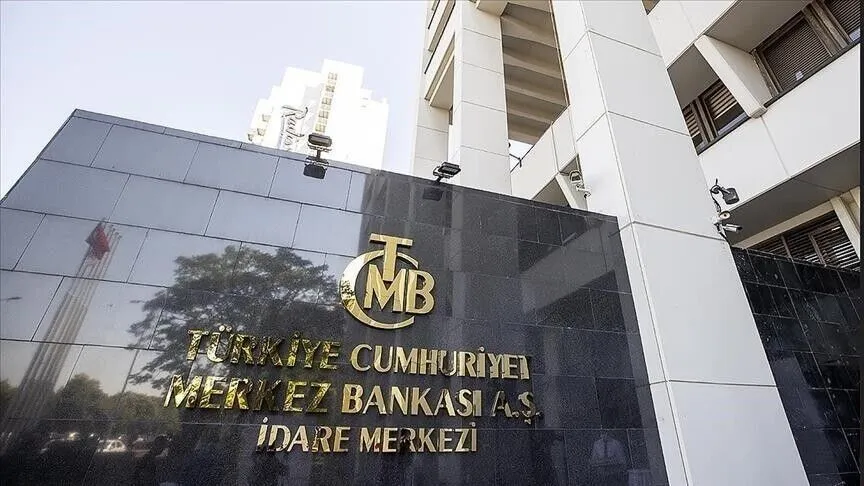
The Central Bank began an easing cycle in July last year, reducing the benchmark lending rate to 37% from 46%. The rate-setting Monetary Policy Committee next meets on March 12.
‘WORST IMPACT WILL BE ON EXPECTATIONS’
Former Treasury official and commentator Mahfi Eğilmez said, “The worst impact will be on expectations, which were already pessimistic,” he said.
Professor Fatih Özatay described the January figure as “very, very high,” noting that after 31 months of an economic program focused on fighting inflation, such a monthly rise highlighted the limits of progress so far.
Several economists stressed that inflation remains far above targets. Murat Sağman said the data showed inflation was still “very high,” pointing to the wide gap between official figures and alternative measures such as ENAG.
HOW WILL CENTRAL BANK RESPOND?
The January reading could complicate the outlook for monetary policy.
According to economist Burcu Aydın, director of Economic and Structural Policies Center at TEPAV, the figure is a “clear barrier” to the Central Bank’s rate-cutting path.
Investment advisor Serdar Pazı said that if February inflation also comes in above 3%, interim inflation targets could be rendered unattainable.
Still, views diverged on how the Central Bank might respond. Financial adviser Eren Can Umut said that despite the surprise, the central bank was unlikely to pause easing and could proceed with a 100-basis-point rate cut at its March meeting. Economists broadly agreed that the January data would weigh heavily on the central bank’s next policy decision.
MINISTER POINTS AT WEATHER CONDITIONS
Treasury and Finance Minister Mehmet Şimşek sought to play down the figures. He said adverse weather conditions had driven food prices well above their long-term average, pushing monthly inflation higher. He emphasized that annual inflation continued to decline and that the impact of January-specific factors on the underlying trend would be limited.
Vice President Cevdet Yılmaz said the higher-than-expected figure was temporary, adding that the government’s core economic program remains intact.
“Although cyclical developments may have the potential to exert short-term positive or negative effects on inflation, the main direction and course of our program is to bring our country back to single-digit inflation,” Yılmaz said in a social media post.
Citigroup economists said Turkey has entered a challenging phase in its fight against inflation following the January data, noting that the disinflation process will be more closely monitored by market participants this year. They forecast year-end inflation at around 24%, well above the Central Bank’s interim target of 16%, citing persistent pressure from services and food prices.
EROSION OF INCOMES
Even official figures point to a rapid erosion of incomes. According to a study by the leftist union DİSK-AR, the minimum wage of 28,075 liras lost 1,359 liras in purchasing power in January alone, while the lowest pension fell by 968 liras. The hunger threshold has now exceeded 31,000 liras.
The government set the minimum pension at 20,000 liras, adding a 1,000-lira inflation adjustment. However, nearly all of that addition was offset by January inflation before payments were delivered.