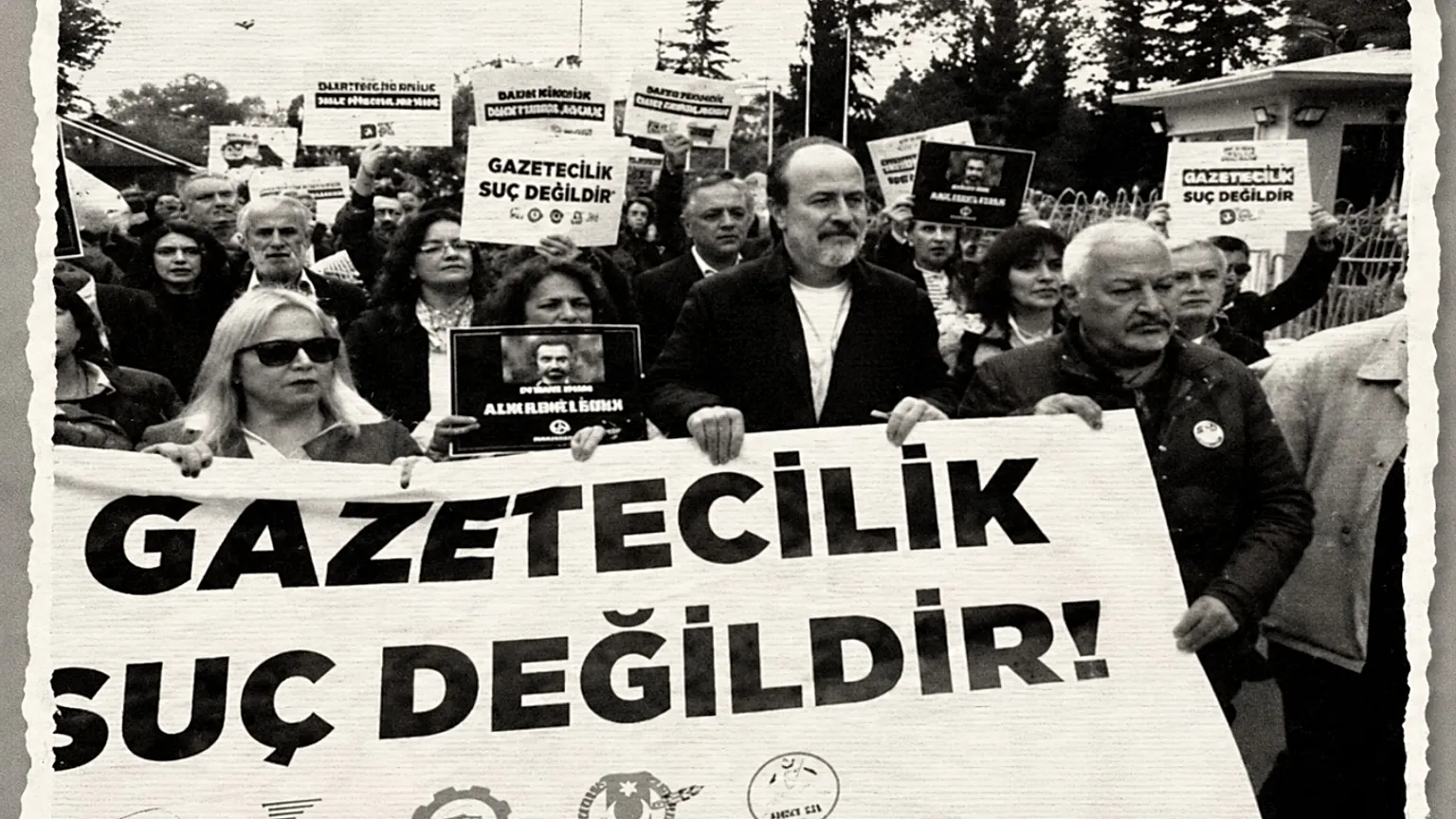
On Oct. 24, journalists marched simultaneously in Istanbul, Ankara, Izmir, Bursa, Eskişehir, Antalya, Adana, Kocaeli, Diyarbakır and Van, answering a call from press unions and professional organizations including the Diplomatic Correspondents Association under the slogan “No to censorship, freedom for news.”
The date marked the first anniversary of the appointment of a trustee to TELE1, and came after the growing crackdowns on media outlets.
Recently, a state-appointed trustee was assigned to the most watched news channel Halk TV, an access ban was issued on independent news portal T24, and thousands of X accounts of journalists and media outlets were withheld.
During the largest organized rally of its kind in years, in Ankara at least 3,000 demonstrators marched simultaneously.
Several opposition politicians, including Yeni Party Chair Özgür Özel and DEM Party Co-Chair Tülay Hatimoğulları joined the journalists in different provinces but like the other groups who gave support to press freedom, they abstained from making remarks not to overshadow the journalists’ rally.
The last time Turkish journalists took to the streets in comparable numbers was in March 2011, after the arrests of then journalists Ahmet Şık and Nedim Şener in the OdaTV probe. The Freedom for Journalists Platform, an umbrella of some 90 press organizations, organized successive marches in Istanbul and Ankara that month. Thousands walked from Galatasaray to Taksim, and journalists in Ankara protested with black tape over their mouths.
In the 15 years that followed, press freedom in Turkey steadily eroded, through mass arrests of journalists, the closure of outlets after the 2016 coup attempt, trustee takeovers of media companies and sweeping access bans. Journalists responded with protests, but these were largely smaller and scattered: vigils outside courthouses, solidarity gatherings at newspaper offices, and a 2015 march to the Cumhuriyet daily after its editors Can Dündar and Erdem Gül were jailed.
Journalists demanded an immediate end to judicial harassment, the release of jailed reporters, and an end to trustee appointments. According to rights groups, between 17 and 30 journalists remain behind bars in Turkey.
Yet, addressing his Cabinet following the protests, President Recep Tayyip Erdoğan firmly rejected the media’s criticisms. 'Those who attack our government under the guise of press freedom should step forward and disclose their distorted, dirty relationships if they can,' Erdoğan said.
He added, 'We have no issue with press freedom or critical voices. Anyone can say, write, or speak whatever they want, provided it does not contain insults, lies, or disinformation.'