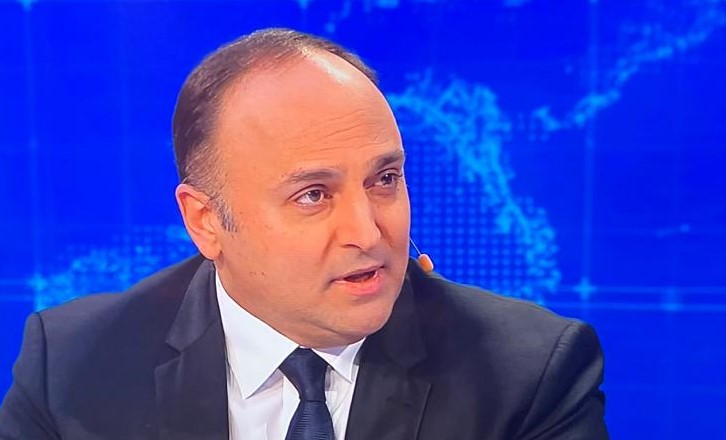
By Cengiz K. Fırat
The newly released U.S. Strategic Security paper signals the most significant shift in American grand strategy since the end of the Second World War. Its defining features are the explicit identification of China as a peer competitor, the reaffirmation of Russia as a principal adversary, and—perhaps most striking—the retreat from the ideological mission that once sustained “the West” as a political and civilizational project.
For Turkey, this transformation presents strategic openings and systemic risks.
Over the past two decades, Turkey has pursued a balance between Russia and China while remaining anchored in NATO. It resisted full participation in Western sanctions on Moscow, kept open diplomatic channels throughout the Ukraine conflict, and expanded economic and strategic ties with Beijing. The new U.S. doctrine implicitly validates this approach. Russia is framed as an adversary requiring containment, whereas China is cast as a competitor with whom negotiated spheres of influence and transactional arrangements may be possible. This reduces pressure on Turkey to adopt rigid alignments and strengthens arguments for strategic autonomy.
In the Black Sea, such autonomy could enhance Turkey’s leverage. With Ukraine weakened, Russia entrenched, and Washington adopting a more selective posture, the Montreux Convention becomes even more vital to regional stability. Ankara’s ability to regulate naval access and mediate between NATO and Moscow positions it as a central actor. Still, militarization and gray-zone activities will also increase Turkey’s exposure to strategic risk.
The Caucasus offers a rare setting where the emerging U.S. approach may produce stabilizing effects. A de facto multipolar balance already exists: Turkey’s deepening partnership with Azerbaijan, Russia’s residual security role, Iran’s regional sensitivities, and China’s economic presence. If Washington is now more inclined to accept regional power arrangements rather than impose ideological templates, conditions may emerge for a more durable Azerbaijan–Armenia settlement.
Such progress would benefit Turkey. Normalizing relations with Armenia, reopening borders, and expanding trade and transit routes would embed Turkey as a logistical and commercial hub. While the risks of renewed conflict remain, in the Caucasus strategic retrenchment and regional pragmatism may converge in Ankara’s favor.
THE MIDDLE EAST AND NEW EUROPE
In the Middle East, a more transactional, America-First strategy partially aligns with Turkey’s skepticism toward Western interventionism. Reduced U.S. engagement in governance or democratization may also decrease pressure on Ankara’s domestic politics. Yet strategic retrenchment inevitably produces power vacuums—and these rarely yield stability.
Israel could fill part of this vacuum, supported by military superiority and implicit U.S. backing. This risks tensions with Turkey, especially amid crises in Gaza, Lebanon, and Syria. Much depends on whether Ankara can compartmentalize relations with Israel or gravitates toward confrontation.
Equally important is the unresolved Kurdish question across Syria and Iraq. This is both a strategic lever and a persistent vulnerability for Turkey, intersecting with the policies of regional and extra-regional actors.
The downgrading of the EU within the hierarchy of Western power, combined with the rise of nationalist and civilizational politics, may further distance Turkey from the European integration project. A more inward-looking, sovereignty-focused Europe is unlikely to advance the case for Turkish membership. At the same time, Germany’s decision to invest in defense at levels unseen since the Second World War will reshape Europe’s security architecture and generate new capability requirements.
AN INDISPENSABLE SECURITY ACTOR?
In this environment, Turkey could move from being a conditional partner to becoming an indispensable security actor. Its military capabilities, indigenous defense industry, operational experience, and geographic depth position it as a natural contributor to a more Europeanized NATO—especially if U.S. engagement continues to narrow. Such a shift would prioritize shared interests over shared values, potentially expanding Turkey’s strategic margin for maneuver.
This moment is not a decisive break from earlier security doctrines that destabilized Turkey’s wider neighborhood. Previous frameworks—often aligned with Israeli threat perceptions—contributed to the fragmentation of Iraq, Syria, Afghanistan, Libya, Sudan, and others. Although the new U.S. strategy no longer emphasizes this logic, there is little evidence that the underlying dynamics have fully disappeared.
Iran’s uncertain trajectory, Lebanon’s fragility, the unresolved future of Syria, the enduring Kurdish issue, and competition over Eastern Mediterranean energy resources will continue to dominate regional agendas. Together, they point toward a prolonged era of volatility—one that will test Turkey’s strategic agility and its capacity to navigate a post-Western world where the rules are shifting but stability remains elusive.
*Cengiz K. Fırat is a retired Turkish ambassador who joined the Ministry of Foreign Affairs in 1993 and concluded his diplomatic career in 2024. Over three decades of service, he held posts in several key Turkish missions abroad, including the EU Delegation in Brussels, the Embassy in Algiers, the OECD Delegation in Paris, and the Embassy in Stockholm. He later served as Turkey’s ambassador to Kyrgyzstan and to Poland.