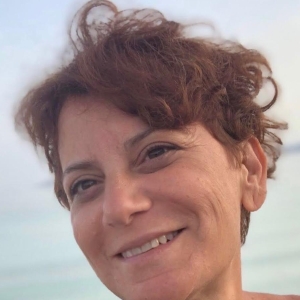
Author & Analyst
Nazlan Ertan
Columnist
Biography
Journalist and communication expert who has covered geopolitics, diplomatic drama and culture from Ankara, Paris, and Brussels since the 1990s. Her bylines include Al-Monitor, BBC Turkish, Hurriyet Daily News, Duvar English and CNN Türk.
Recent Articles by Nazlan Ertan

April 18, 2025
Word of the Week
In Turkish, “normal doğum” refers to vaginal birth. But the term itself is anything but neutral. By naming one method “normal,” it quietly casts others — cesareans in particular — as “abnormal”. For women who undergo C-sections, whether for medical reasons or out of their own choice, the implication is clear: you failed to deliver the “natural” way. In fact, a Health Ministry ran a public ad two years ago that did just that: in a clumsily-shot clip, a baby just delivered by vaginal birth tells the mother that they “succeeded.” The contested term has once again taken center stage — not in a hospital, but on a football pitch.
Read article
April 4, 2025
Word of the Week
The word of the week is—surprise, surprise—“boycott.” This word has its roots in Ireland but was readily adopted by the Ottoman Empire as “boykotaj” in the early 20th century. It all began with a stubborn man and a group of angry farmers. Charles Boycott, the eponymous land agent in 19th-century Ireland, refused to lower rents. In return, local tenants refused to acknowledge his existence—no violence, no slogans—just pure, icy silence. Labourers wouldn’t work his land, shopkeepers wouldn’t serve him, even the postman changed routes in what was the forefather of today’s cancel culture. Boycott became so isolated that his name turned into a verb.
Read article
March 7, 2025
Word of the Week
My grand-aunt never used the word 'zorba' to describe a bully, though it would be the first term to come to mind for many Turkish speakers. Instead, when one of the boys in the family became too combative, she would say, 'What are you, a small 'Ali Kıran Başkesen'?' The phrase, which translates literally as 'Ali who crashes things and cuts heads,' is a Turkish term for an authoritarian bully. It derives from the proverb 'Dalı kıran, baş keser' ('Whoever cuts a branch cuts a head'), originally a cautionary ecological metaphor that somehow evolved into the ultimate descriptor for an overbearing strongman.
Read article
February 28, 2025
Word of the Week
A university diploma is more than just a piece of paper. It’s a ticket to professional success and social prestige. But in Turkey in recent years, it has also become an object of national obsession, political ammunition, and judicial entanglement. Take, for instance, the latest storm swirling around Istanbul Mayor Ekrem İmamoğlu. In February 2025, he found himself under investigation for allegedly forging his university diploma—a charge that could have significant political consequences. The Istanbul Chief Public Prosecutor’s Office launched the probe following a report from the Council of Higher Education (YÖK) questioning the legitimacy of his academic credentials.
Read article
February 14, 2025
Word of the Week
The word of the week is “ayazda kalmak,” literally translated as “being left out in the cold.” This phrase conveys the sting of exclusion, akin to the English “getting the cold shoulder.” It vividly portrays the experience of feeling neglected or overlooked, much like standing outside on a frosty night while others bask in warmth within. This colloquial idiom recently gained attention following a gathering of the CHP's “Big Three” on Feb. 9. CHP Chair Özgür Özel, Istanbul Mayor Ekrem İmamoğlu, and Ankara Mayor Mansur Yavaş convened to discuss whether the party should hold primary elections to determine its presidential candidate (Check Deep Dive for more). The photo from the meeting showed the three seated at a table by a fireplace, their notepads open, smiling convivially—your standard political meeting photo. No official statements were made.
Read article
January 31, 2025
Word of the Week
In the rich tapestry of Turkish names, few are as paradoxical as 'Satılmış.' Literally translating to 'sold' or 'sell-out,' this name carries a weighty connotation that intertwines cultural beliefs, societal perceptions and individual destinies. In Anatolian traditions, giving newborns names like 'Satılmış' or the female version “Satı” is a protective measure. The name was traditionally bestowed upon children with the underlying belief that by symbolically 'selling' the child, parents could deceive malevolent spirits or fate, thereby safeguarding the child from harm or premature death. This practice reflects an interplay between language, belief systems, and cultural practices in Anatolian societies.
Read article
January 24, 2025
Word of the Week
In Turkey, the word “yangın” (fire) has been a literal and metaphorical agent of change, leaving lasting marks on cities, culture, and society. Fires frequently serve as dramatic turning points in Turkish popular culture, from the 1960 film “Fire,” an Ottoman-era period piece in which the daughter of a pasha falls for a tulumbacı (Ottoman firefighter), to the modern TV series “Cranberry Sorbet,” which united estranged lovers after a tragic blaze. Adopting the usual satirical tone for the Word of the Week is impossible as the nation mourns after the Grand Kartal Hotel fire at the Kartalkaya ski resort in Bolu. The blaze, which began in the restaurant section and quickly engulfed the 12-story building, claimed at least 78 lives, including children on winter break, and injured 51 others.
Read article
January 10, 2025
Word of the Week
The term “arabesk” (arabesque) originates from the Italian “arabesco,” (“in the Arabic style,”) initially describing ornate patterns featuring interlacing foliage and geometric designs. In Turkey, however, “arabesk” evolved beyond its artistic origins to signify a deeply emotive genre of music that emerged in the 1960s, blending Middle Eastern melodies with themes of longing, despair, and resilience.
Read article
January 3, 2025
Word of the Week
I had hoped to welcome 2025 with the word “umut”—hope—dear readers. Yet the somber mood of New Year’s Eve, when deserted streets echoed the gloom on Turkish television, has nudged me toward a more fitting phrase for the times: the 3Ys of Turkey. “Yoksulluk, Yolsuzluk, Yasaklar”- poverty, corruption, and prohibitions.
Read article
December 13, 2024
Word of the Week
In Turkish, ağır abi, literally “heavy-weight bro”—is not your run-of-the-mill elder sibling. He is a stoic, charismatic figure who commands respect with the mere arch of an eyebrow. He doesn’t talk much; he doesn’t need to. His presence alone does the heavy lifting. And if anyone currently embodies the essence of an ağır abi, it’s Hakan Fidan, Turkey’s inscrutable foreign minister. Fidan, poker-faced and perpetually unruffled, has become the leading man in Turkey’s diplomatic theater, even overshadowing the usual stars, such as President Erdoğan and the minister of defense. He seized center stage after the fall of Bashar al-Assad’s regime in Syria, stepping up to the podium in Doha with all the composure of a man placing bets in a high-stakes poker game. His words called for an inclusive transition in Syria: “The new administration must be established in an orderly manner. There must never be a desire for revenge. It is time to unite and reconstruct the country.”
Read article