Author & Analyst
Nazlan Ertan
Columnist
Biography
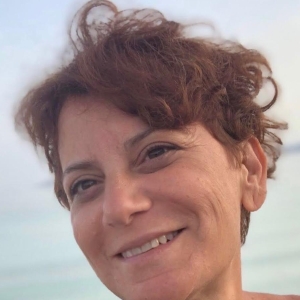
Journalist and communication expert who has covered geopolitics, diplomatic drama and culture from Ankara, Paris, and Brussels since the 1990s. Her bylines include Al-Monitor, BBC Turkish, Hurriyet Daily News, Duvar English and CNN Türk.
Recent Articles by Nazlan Ertan

December 6, 2024
Word of the Week
Halep (Aleppo, proper name) touches Turkish hearts, minds, imagination, language and, of course, the political rhetoric in a way few cities of the Ottoman Empire do. The southern jewel of the empire, the city has been a touchstone of trade, culture, and storytelling. But, as far as your cheeky columnist is concerned, its true linguistic value lies in being the punchline in one of Turkey’s wittiest sayings: “Halep oradaysa arşın burada”—“If Aleppo is there, the yardstick is here.” This phrase is more than a geographic observation; it’s a challenge. Based on the oral tale of a man who claimed that back in his great days in Aleppo, he could leap just as high as one could imagine, it’s what you say to someone boasting about their impressive feats in far-off places. “Sure, we can no longer ask around in Aleppo,” it implies, “but let’s see how you measure up here, in the present, with evidence.” In other words, put up or shut up and do not expect us to be persuaded by tall tales.
Read article
November 22, 2024
Erospolis
Hats off to Yusuf Tekin, Turkey’s controversial education minister, for cramming all of Turkey’s thorny subjects into a single speech and creating a debate that drew in political party leaders, actresses, and laymen. It was a performance to steal the limelight from Trump, let alone Erdoğan himself. The Erzurum-born minister, who launched a controversial new curriculum last year, traveled from Baku to Batman, where he presents his education strategy to a large audience. On Nov. 17, he attended COP29 in Baku, where he explained how environmental awareness was now part of the Turkish education system. His critics would say he referred to the controversial project called CEDES, an acronym for “I protect my environment and claim my values.” The project does have an environmental focus, but it also has a “religious values” component under which local imams and preachers are assigned to each school in the project to provide spiritual guidance for students.
Read article
November 22, 2024
Word of the Week
Maarif (Education, noun) is derived from the basal root Arf in Arabic, meaning knowledge. In the Ottoman Empire and early years of the Turkish Republic, the Education Ministry was called “Maarif Vekaleti.” In 1946, Maarif Vekaleti was rebaptized as “Milli Eğitim Bakanlığı,” using the modern Turkish word for both education and ministry and adding the term “national.”
Read article
November 15, 2024
Inside Turkey
Kumar (Gambling, noun) derives from Arabic and is forbidden in Islam, as spelled out in Surah al-Maidah of the Quran, where gambling is condemned alongside wine and idolatry. The aim? To incite enmity, foster distraction, and veer Muslims away from prayer. Fast forward to modern-day, secular Turkey, where gambling has made headlines once more. This time, TV personality Mehmet Ali Erbil and pop singer Serdar Ortaç, notorious for their sketchy reputations, were busted for illegal betting. The outcome? House arrest—a promising move for Erbil, an alleged serial harasser.
Read article
November 15, 2024
Erospolis
The tragic story of five young children who perished in a house fire on Nov. 11 underlines the brutal toll of systemic poverty and neglect on society's most vulnerable. Left alone while their mother was out collecting scrap metal to survive, these children died after the electric heater, the only means to heat their makeshift home, went up in flames. Their short lives were tragically cut short not just by fire but by layers of systemic poverty and inadequate social support. The news of their death in Izmir came at a time when many - but not all - world leaders were at Baku for the COP29, making promises of inclusivity, pledging to 'leave no one behind' in addressing climate change, and vowing to secure sustainable development and environmental/social justice. The principle of leaving no one behind, fundamental to the UN’s Sustainable Development Goals, resonates with promises of justice, equality, and access to basic needs for all. Yet, the Izmir fire reveals that these are slogans on a page while the situation on the ground shows many without adequate housing, safety nets, and opportunities to escape poverty.
Read article
November 8, 2024
Word of the Week
Kayyum or Kayyım (trustee, noun) often crops up on the Turkish agenda like an unwelcome ex-chief at a political celebration. The English-language media has translated it as trustee, as in “Turkey sacked three mayors in the Kurdish-majority southeast on alleged 'terrorism' charges and replaced them with trustees.” But as with most things, context is key. The word is actually an exalted name in Islamic theology, describing an attribute of God: the eternal, self-sustaining one, who maintains all existence. The term implies omniscience and omnipotence—qualities far removed from the bureaucratic function of trustee appointments. In more everyday language, it’s also a term for a mosque custodian. But lately, Turkey’s government has repurposed the term, applying it to officials appointed to oversee (or seize) the operations of private companies, foundations, and -mostly- municipalities suspected of wrongdoing. It should not be confused with a guardian (vasi), whose role implies that the person they care for is legally incapable of managing their own affairs. Tanıl Bora, master of Turkish political terms, explains: “A guardian is appointed to a person, a kayyum to property.”
Read article
November 1, 2024
Erospolis
“When good bureaucrats retire, they go to Istanbul,” quipped a Turkish diplomat at his farewell dinner several years ago. He was about to join the steady flow of ex-ambassadors and senior officials who settle comfortably into Istanbul’s glamorous private sector. While these bureaucrats enjoy Istanbul’s cosmopolitan delights and lucrative board positions, politicians with unsatisfied ambitions would do well to think twice. The graceful transition from bureaucracy-laden Ankara to Istanbul’s cultural and economic limelight might be liberating—but for politicians, it often signals the end of the line. Take Abdullah Gül, who leads the parade of high-profile politicians who found themselves in Istanbul once their grip on Ankara slipped. Gül, the soft-spoken Number Two to Erdoğan at the founding of AKP, left the presidency in 2014 with considerable bitterness, feeling sidelined by Erdoğan and his team. Settling first in Tarabya’s Presidential Palace and then in a private villa in Beykoz, he became a figure whom former allies and even foes sought out for advice on new parties, and periodically as a possible challenger to Erdoğan. Yet, Gül never took the plunge, proving that the view from Istanbul is often one of wistful distance from real political clout.
Read article
November 1, 2024
Word of the Week
İmam nikahı, or dini nikah (religious wedding), has long been a battleground for women’s rights activists who strongly oppose religious marriage and support strict penalties for imams and muftis (Muslim clergy) who conduct religious unions without first ensuring that the couple has undergone a civil ceremony. Turkey’s laws on marriage are regulated by the 1926 Civil Code, which abolished polygamy, introduced civil marriage, and mandated that any religious ceremony—should citizens of the newly established secular state choose to hold one—must follow civil registration in a municipal office. In villages, chieftains (elected officials) conduct the ceremony, while consular officers perform civil ceremonies for Turks abroad. Under the 1926 laws, religious officers—whether imams, priests, or rabbis in Turkey’s multi-faith society— had no authority to perform official weddings, as they cannot verify the legal requirements, such as the age of the would-be spouses or whether they are already married.
Read article
October 25, 2024
Erospolis
A week after the revelation of a scandal involving a criminal network that reaped profits by exploiting newborn babies, President Recep Tayyip Erdoğan vowed on Oct. 22 to take swift action. “As president of the republic, I will ensure that those monsters who destroyed the lives of babies never see the light of day again,” he pledged. The “Newborn Gang” scandal has cast a shadow over Erdoğan’s healthcare policies, a critical electoral stronghold for his Islamist-populist AKP.
Read article
October 25, 2024
Word of the Week
İp (noun, rope, as in noose) made a dramatic entrance into Turkey’s political lexicon this week when the İyi Party’s new-ish leader, Müsavat Dervişoğlu, hurled a noose at MHP leader Devlet Bahçeli. This came in response to Bahçeli’s suggestion that PKK leader Abdullah Öcalan could be granted certain privileges—potentially even addressing Parliament—if he were to publicly call for the PKK’s dissolution. (For details, see last and this week’s Deep Dive.)
Read article