By Barçın Yinanç
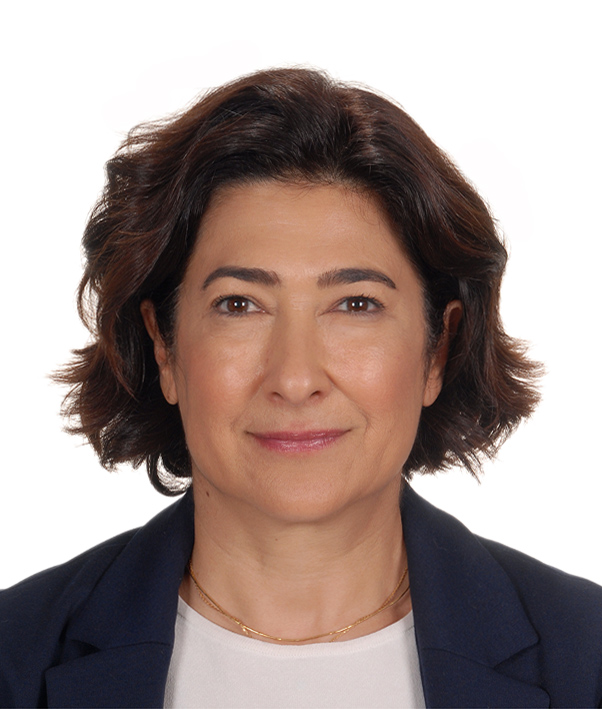
European Commissioner for Enlargement Marta Kos succeeded in angering both the government and the opposition with her stance towards the arrest of Istanbul Mayor Ekrem İmamoğlu on March 19, 2025.
It took ten days for her to decide to cancel her participation at the Antalya Diplomacy Forum scheduled for mid-April, as well as her official visit to Ankara.
In an unusual move, Ankara reacted with a social media posting by then-envoy to the EU, Ambassador Faruk Kaymakçı.
“The decision to cancel the visit was a move driven by political motives, aimed at satisfying certain circles within the EU,” said the post.
By the end of July, the same year when Kos met with Foreign Minister Hakan Fidan in Istanbul, the dust had settled, and democratic backsliding became again a non-issue since membership negotiations remain frozen.
Only limited lip service will be paid to the democratic deficit in Turkey when she visits again on Feb. 6.
In addition to Foreign Minister Fidan, Kos will meet Vice President Cevdet Yılmaz, Minister of Trade Ömer Bolat and Minister of Finance Mehmet Şimşek. She is scheduled to have dinner with the representatives of the business community, including the presidents of TÜSİAD and TOBB.
MAASTRICH CRITERIA TO THE FORE RATHER THAN COPENHAGEN
Her visit suggests the commissioner for enlargement prioritizes the Maastricht economic criteria rather than the Copenhagen (political) criteria, as she is not scheduled to meet either the interior or justice minister.
She is also carefully avoiding direct contact with opposition parties. Her visit to the Parliament, to meet with the members of the EU harmonisation commission, cannot be promoted as “contact with the opposition.”
It is hardly a coincidence that she opted to give an interview to the Anadolu News Agency, thereby steering clear of remarks on the erosion of fundamental rights in Turkey.
Yet perhaps to avoid possible criticism from the European Parliament, she is also scheduled to meet “successful women leaders” in Ankara.
At any rate, the focus of her visit will certainly be on reviving dialogue between the EU and Turkey, especially on economic fields. That said, looking at the messages coming from both sides, the talks will likely fall short of unblocking irritants on bilateral issues, including trade.
According to a source from the Foreign Ministry, Kos will be told Ankara expects the EU to take concrete steps, foremost among them the complete lifting of the European Council Conclusions of July 15, 2019.
In July, 2019 the EU decided to scale back relations with Turkey by suspending high-level dialogue, reducing pre-accession financial assistance, and reviewing European Investment Bank (EIB) lending.
CYPRUS PROBLEM
High-level dialogue already started between Ankara and the EU on selected issues as of last year and two letters of intent will be signed between Turkey and the EIB during Kos’ visit.
She did not, however, deliver encouraging messages either on the update of the customs union or the “Made in Europe” initiative.
“We should make much more out of this trading relation, including the improvement of the functioning of the customs union and removing some barriers we still have there,” she told Anadolu.
“Both sides should work on this” while there is a “clear will and possibility,” she said while tying the issue to the Cyprus problem.
All political developments, and especially relations with the Greek Cypriot Administration, can help to make progress “in this area,” added Kos.
“If we take together economic and geopolitical logic, this cannot exclude Türkiye,” said Kos, talking about the “Made in Europe” initiative, adding that to participate in EU public procurements, first, the conditions enabling trade need to be “further developed,” a rather ambiguous statement which can not alleviate Turkish business circles’ fear of exclusion.
Another area where Turkey feels excluded: the EU’s defense and security plans will also be on the agenda, according to a source from the Foreign Ministry.
Turkish companies have been given very limited access to the Security Action for Europe (SAFE) mechanism.
Yet, speaking to Anadolu, Kos left no room for hope on possible progress in this field.
The development of EU security policy depends on member states, warned Kos, adding, “The new Cyprus settlement talks are a great opportunity for improvements also in this area.”
When it comes to visa liberalization, Kos again only provided empty rhetoric, saying she will keep the issue high on the agenda.
In short, talks on important hurdles blocking progress in several aspects of bilateral ties will be a dialogue of the deaf.