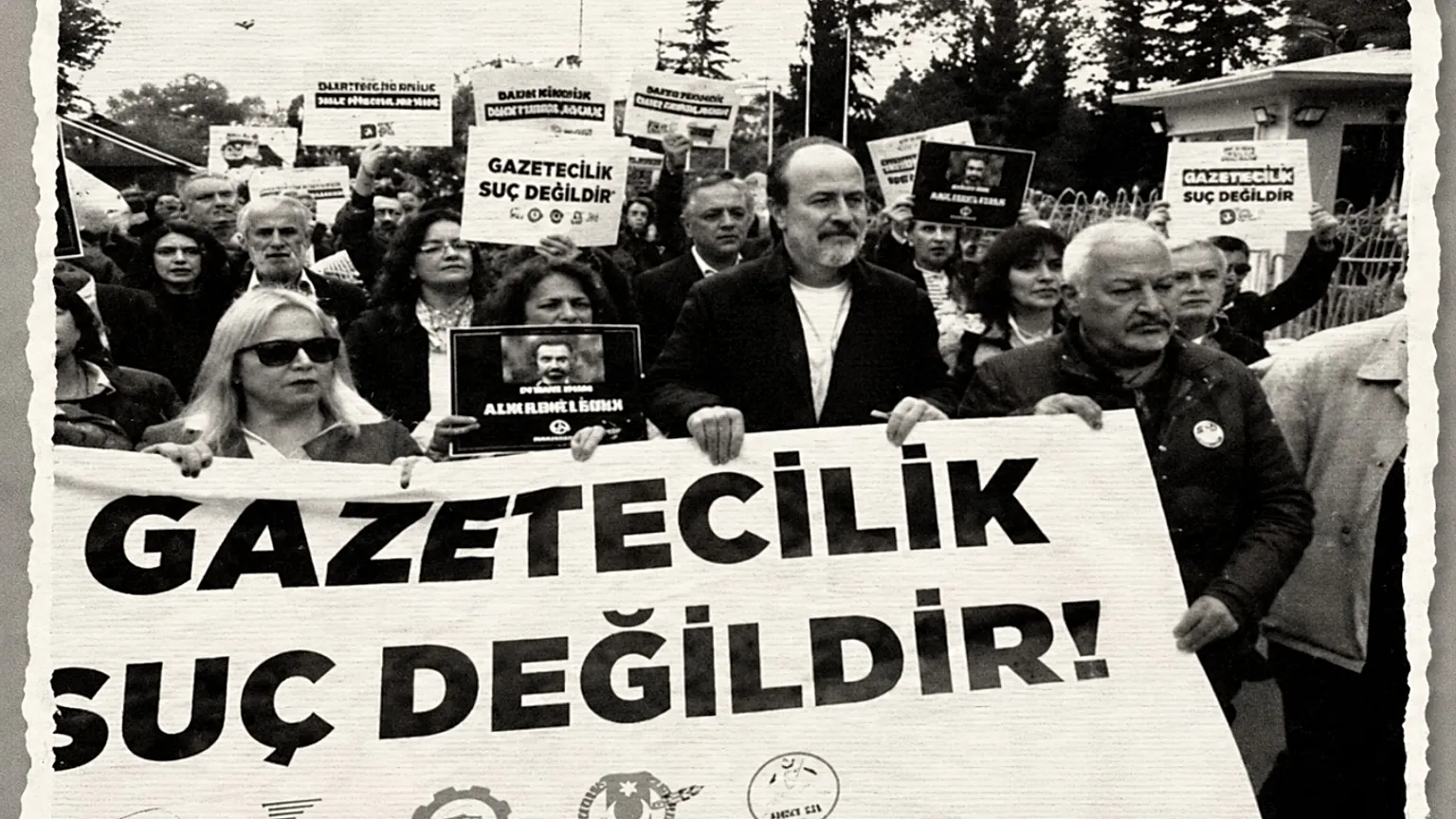
A Turkish court has handed a four-year prison sentence to journalist Fatih Altaylı after he was convicted of threatening President Recep Tayyip Erdoğan.
Altaylı, known for his popular YouTube programs, denies the charges and plans to appeal, after prosecutors accused him of physically threatening the president based on remarks he made on his channel. He was arrested on June 22 and appeared before the judge for the second time at this week’s hearing.
He was sentenced to four years and two months in prison for threatening the president. The court ruled that judicial control would be insufficient and ordered that his detention continue. Altaylı threw the notes and files in his hand after hearing the decision and left the courtroom.
In the hearing, Altaylı said that he did not commit any crime and cited similar cases as precedents. He noted that he had no organizational ties and had not engaged in violence, adding that the president was not a fearful person and that his statements were being interpreted unfairly.
Supporters protested the decision inside the courtroom.
Academics Celal Şengör, İlber Ortaylı, Murat Bardakçı, CHP MPs Utku Çakırözer and Sezgin Tanrıkulu, and İYİ Party MP Lütfü Türkkan followed the hearing in Silivri to show support for Altaylı.
Bardakçı, a member of the Presidential Council for Culture and Arts Policy and a commentator who had hosted joint programs with Altaylı for long years, faced backlash in the hall. An audience member turned to him and said, “Are you happy now? Your people won.”
In his YouTube broadcast, Altaylı commented on public sentiment regarding Erdoğan remaining in office for life. Stating that 70% of the public opposed the idea, Altaylı said that in the past, people had strangled sultans they no longer wanted.
Altaylı was arrested on June 22, not under Article 106/1, which regulates general threats, but under Article 310/2, reserved for physical attacks against the president. If charged under Article 106/1, he would have faced six months to two years in prison and likely would have remained free pending trial. But under Article 310/2, which mandates a minimum sentence of five years, his televised remarks were treated as if they constituted physical assault—despite the law requiring actual physical acts.
Altaylı has more than 1.5 million subscribers on YouTube, and after his arrest, he began sending diary entries from Silivri Prison. His program partner Emre Acar voiced the letters, while Altaylı’s seat remained empty. Following the first hearing in October that upheld his detention, Altaylı — one of Turkey’s most-watched YouTube commentators — decided to suspend his broadcasts.