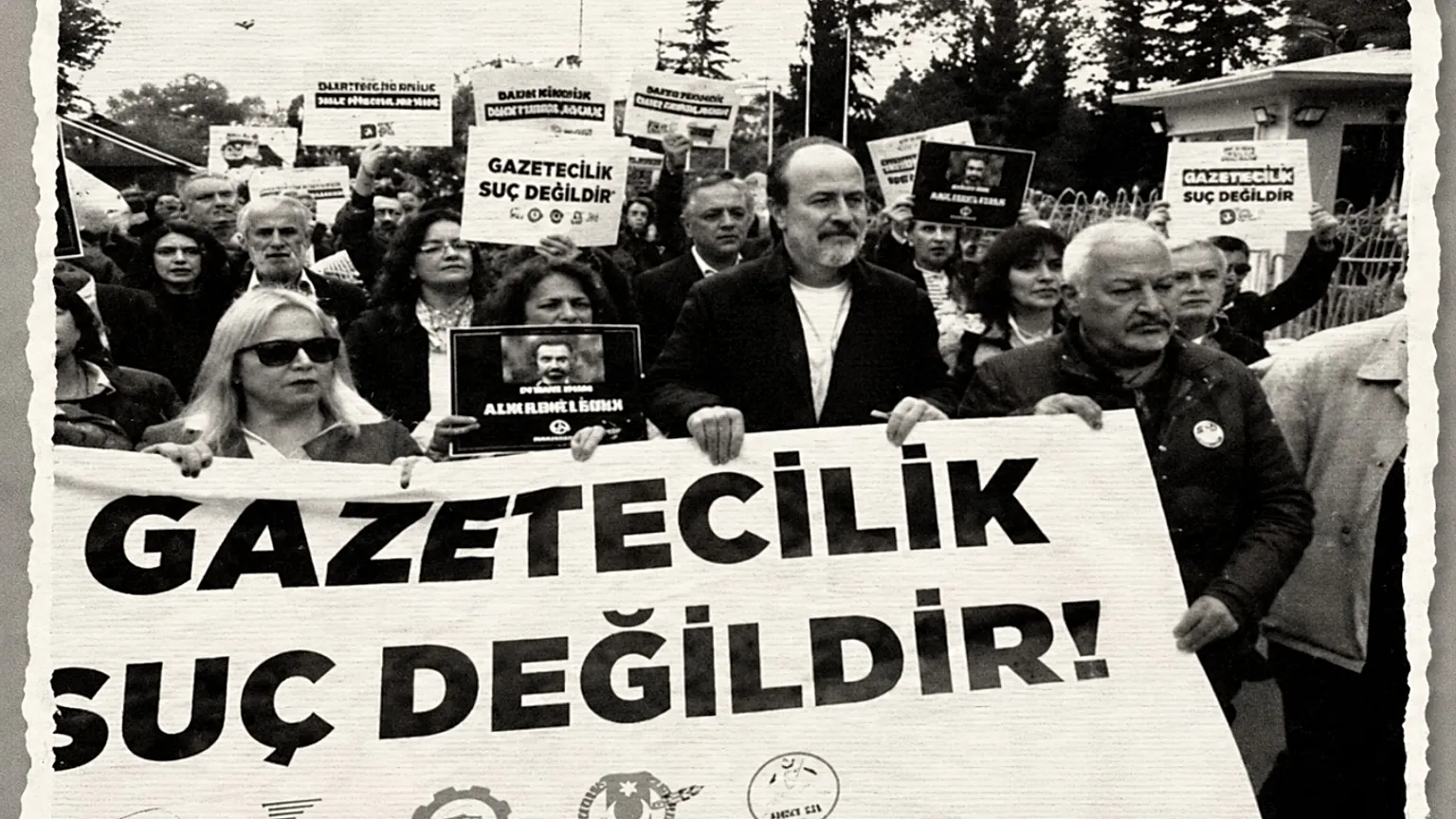
Two Turkish courts have handed down prison sentences to four journalists who were facing the same accusation of 'spreading information misleading to the public,' under Article 217/A of the penal code.
Journalists Timur Soykan, Barış Pehlivan, Murat Ağırel and Şule Aydın were tried over claims aired on the program 'To be Registered' (Kayda Geçsin) on October 8, 2024, in which they noted that Turkey had continued trading with Israel and that gold smuggling was taking place in the VIP section of the Istanbul Airport, despite the official statements.
The journalists, who parted ways with Halk TV and launched their platform on YouTube, did not attend the hearing as their lawyers were representing them in court. While Aydın, as the moderator of the program, was acquitted from all charges, the others were not.
Soykan was sentenced to 10 months in prison on charges of 'violating confidentiality,' though the court deferred the announcement of the verdict. He was acquitted of charges of 'spreading information misleading to the public' and 'publicly denigrating religious values held by a segment of the public.'
Yet, Pehlivan received one year and three months in prison for 'spreading information misleading to the public' and was acquitted on the 'violating confidentiality' charge.
Ağırel was likewise sentenced to one year and three months for 'spreading information misleading to the public' and acquitted on charges of 'violating confidentiality' and 'publicly denigrating religious values.'
SAME ACCUSATION, DIFFERENT CONVICTION
In a separate case heard at Istanbul's 23rd Criminal Court of First Instance, journalist Zafer Arapkirli was sentenced to two years and six months in prison on charges of 'spreading information misleading to the public' stemming from social media posts.
He was acquitted on a separate charge of 'inciting the public to hatred and enmity.'
Arapkirli's lawyer, Istanbul Bar Association Chair İbrahim Kaboğlu, referenced recent criticism of Article 217/A of the Turkish Penal Code — the provision on spreading misleading information to the public — and noted that they had taken the article to the Constitutional Court following its adoption.