Tom Barrack, now appointed as special envoy to Iraq in addition to his ambassadorial role in Turkey and special envoy role in Syria, described Iraq, Syria, and Turkey as 'the strategic fulcrum upon which any enduring Middle East stability must pivot,' calling for a single, consistent point of American contact across the three nations.
'In the tradition of those who have long studied the Levant and Anatolia — Iraq, Syria, and Turkey remain the strategic fulcrum upon which any enduring Middle East stability must pivot. Balancing these three nations requires a single, consistent point of American contact and leverage — transcending tribal, religious, or sectarian differences,' wrote Barrack on X. He added that this mission, which Trump has also embraced, seeks to aid the region in aligning itself toward shared prosperity by weaving its disparate threads into one coherent tapestry of order and mutual interest.
WELCOMING BARRACK'S NEW TITLE
Hürriyet Ankara bureau chief Hande Fırat wrote that Trump's decision to appoint Barrack as Special Presidential Envoy for Iraq is not a routine diplomatic move — it is a declaration of how Washington now reads the Middle East.
For the first time, the Iraq, Syria, and Turkey files are being handled by a single person, wrote Fırat. Barrack's own words — describing the three countries as 'the strategic fulcrum of Middle East stability' — signal that Washington no longer looks at borders but at security corridors, viewing the axis from Iraq through Syria to the Mediterranean as one strategic space, with Turkey at its center.
According to Fırat, the timing is related to Iran. As Tehran's regional influence erodes — in Lebanon, Syria, and economically — Washington is asking who will fill the vacuum. Iraq becomes the key arena: energy routes, the Development Road project, the Gulf, PKK, Iranian influence — all converge there. Barrack's framing of state control over weapons as 'the foundation of a reborn Iraq' reflects Washington's long-held desire to dismantle Iran-linked parallel armed structures.
‘TURKEY BLOCKED US-ISRAELI PLAN TO USE KURDISH FORCES IN IRAN’
A former senior Israeli intelligence official has publicly confirmed that Turkey blocked a US-Israeli plan to deploy Kurdish forces as part of a regime-change operation in Iran — an account that sheds new light on Ankara's growing weight in Washington's Middle East calculus.
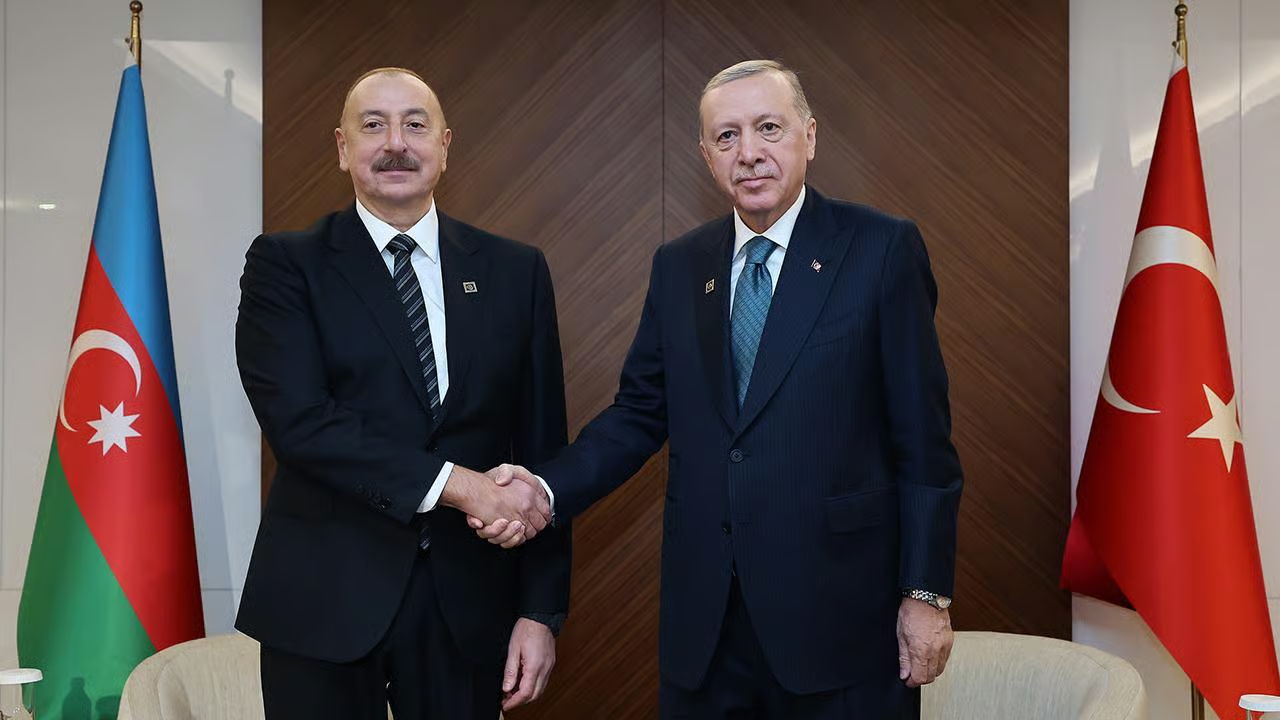
Tamir Hayman, who headed Israel's Military Intelligence Directorate between 2018 and 2021 and now leads the Institute for National Security Studies, told PBS's Firing Line that the operation's centerpiece was to have begun with what he called a 'Kurdish invasion.' Turkish President Recep Tayyip Erdoğan personally convinced President Donald Trump to abandon the plan, Hayman said, arguing that US backing for Kurdish statehood ran directly against Turkey's interests. When asked whether Trump canceled the operation, Hayman was unequivocal: 'Definitely.'
Hayman's account echoes earlier Turkish media reporting. In March, Ankara was said to have intervened diplomatically to block Kurdish groups from serving as a proxy force, warning the PKK against involvement and holding talks with Iraq's Kurdistan Regional Government. Erdoğan also raised the issue directly with Trump in a phone call, stressing Turkey's opposition.