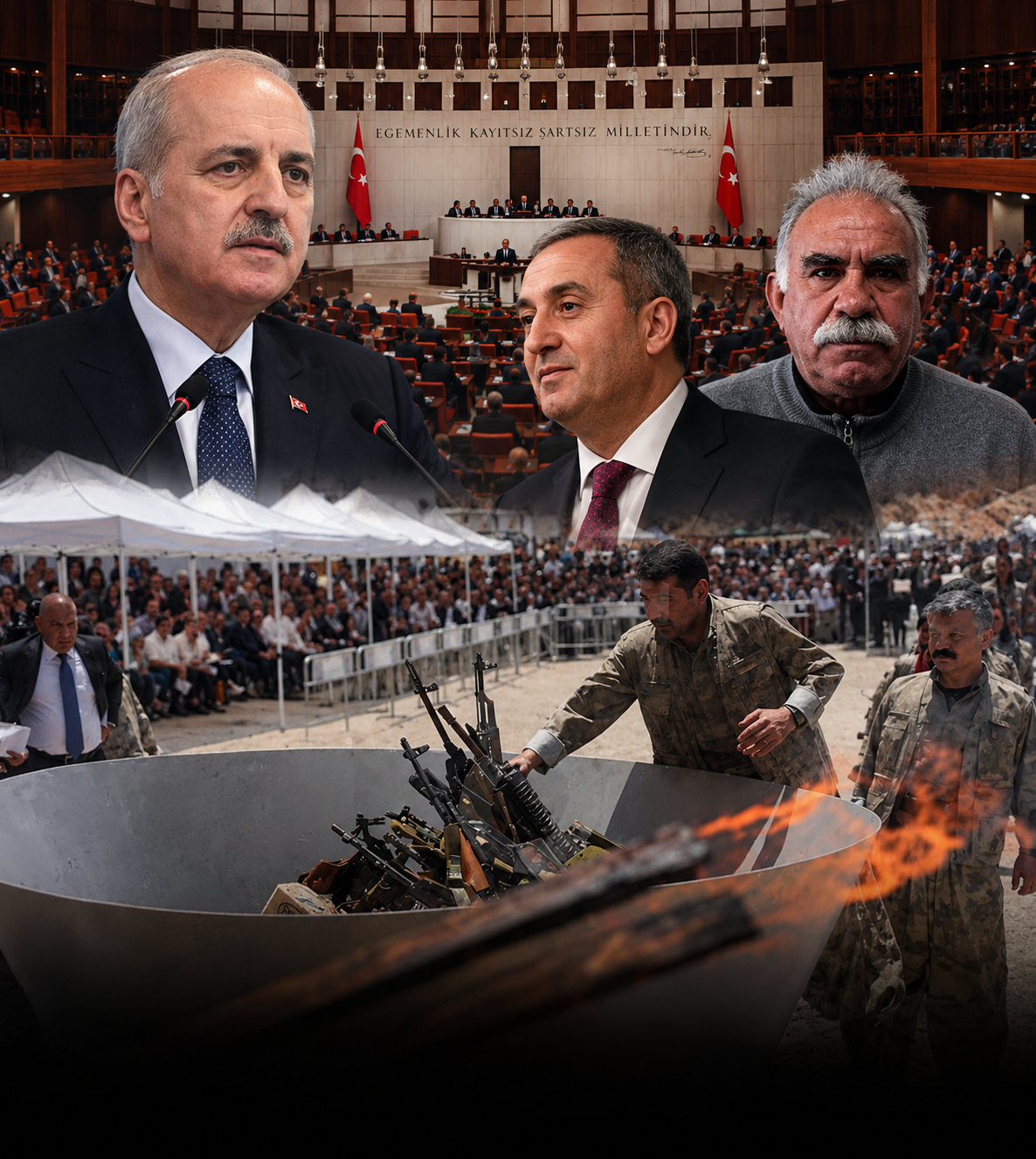
PEACE PROCESS STALLS AGAIN
The parliament has not established a commission to monitor progress on the surrender of weapons and personnel by the Kurdistan Workers’ Party or PKK, and Kurdish groups are complaining the process is stalled.
Analysis
Smart, independent reporting on Turkey's politics, economy and foreign affairs.
The parliament has not established a commission to monitor progress on the surrender of weapons and personnel by the Kurdistan Workers’ Party or PKK, and Kurdish groups are complaining the process is stalled.
“The European Union will open its vast economy to countries waiting to join its ranks, provided they agree to stand with the bloc against hostile states and industrial rivals, according to a draft European Commission proposal obtained by POLITICO.”

Although the Yeni Party did not sign the framework bill designed to advance the Kurdish peace process, some of its MPs are expected to support the law in the General Assembly, since some of its MPs contributed to the commission in the parliament under the CHP banner.
Akın Gürlek, the prosecutor who has overseen several high-profile cases involving members of the CHP, became justice minister four days after European Commissioner for Enlargement Marta Kos visited Ankara.
As domestic political tensions remain high following a parliamentary visit to PKK leader Abdullah Öcalan on İmralı Island on Nov. 24, the National Solidarity, Brotherhood and Democracy Commission has again delayed its meeting. The commission will now convene for its 19th session on Dec. 4, ten days after the visit.
The parliamentary commission tasked with advancing the new peace process between the PKK and Turkey is heading toward a landmark meeting on Nov. 21, when it is expected to decide whether to visit Abdullah Öcalan on İmralı Island, where he has been serving a life sentence since 1999. Although the outcome in the 51-member body initially appeared certain — with the AKP, MHP, DEM, TİP and EMEP signaling support for the visit — shifting political dynamics have pushed discussions toward avoiding a formal vote altogether, according to last-minute reports ahead of the meeting. The move is seen as a way to ease pressure on parties — particularly the AKP and CHP, both facing internal sensitivities — even though initial reports had suggested the commission would hold a vote on whether to visit Öcalan.
The parliamentary commission formed to pave the way for a new Kurdish peace process remains stuck over whether its members should visit jailed PKK leader Abdullah Öcalan. A planned session of the commission has been postponed once again, even as hopes rise for the release of imprisoned Kurdish politician Selahattin Demirtaş following a third ruling by the European Court of Human Rights (ECHR).
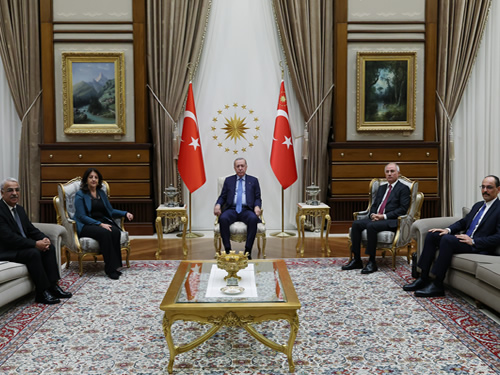
President Recep Tayyip Erdoğan hosted the DEM Party’s İmralı delegation, as the parliamentary commission listened to Foreign Minister Hakan Fidan and Justice Minister Yılmaz Tunç for the first time since the PKK announced that all its forces in Turkey had begun withdrawing to northern Iraq.
The photos taken at the start of the new legislative year, in which President Recep Tayyip Erdoğan posed with chairs of opposition parties, including AKP breakaways, in the absence of the CHP, revealed the contest between the AKP and the CHP to win their support. After the images went viral, Erdoğan renewed his call for a new constitution more forcefully, while his ally, MHP Chair Devlet Bahçeli, insisted that the parliamentary commission visit PKK leader Abdullah Öcalan in İmralı and urged Öcalan to call on the Syrian Democratic Forces (SDF) to lay down arms. The same day, slogans in Kurdish for Öcalan’s freedom — “Biji Serok Apo” — were chanted at the DEM Party’s group meeting. The party, which holds the third-largest number of seats in parliament, could significantly alter the political dynamics if it supports a constitutional change. While the photos of opposition figures with Erdoğan drew sharp criticism in the opposition media, concerned about alienating them, CHP Chair Özgür Özel personally called all opposition party chairs to ease the row.
The new legislative year of the Turkish Parliament opened without the CHP, which boycotted the session in protest at President Recep Tayyip Erdoğan and the ongoing crackdown—starting debate over parliamentary legitimacy. Erdoğan swiftly countered the criticism, declaring that “legitimacy comes from the people.” He followed his remarks with a symbolic gesture: shaking hands with all parliamentary group leaders, including first-time photo-ops after many years with the heads of AKP offshoots DEVA and the Gelecek Party. Notably, Erdoğan coolly used his address to tell the pro-Kurdish DEM Party that the next phase on the Kurdish issue will be implementation. Praising the work of the National Solidarity, Brotherhood and Democracy Commission for holding 12 meetings so far with broad participation from political parties, Erdoğan said, “Once the commission completes its work, we will undoubtedly have very important findings in hand. The next phase will be the implementation of the proposals raised within the commission, as a result of consultation and consensus.”
Hours before parliament’s “National Solidarity, Brotherhood and Democracy Commission” was to listen to the views of mothers whose children were lost to PKK or state violence, a white Renault 12 Toros — long remembered as a symbol of Turkey’s unsolved killings in the 1990s — was set on fire at Parliament’s Çankaya gate.
Turkey’s newly formed National Solidarity, Brotherhood and Democracy Commission—tasked with preparing the framework for the PKK’s disarmament—has held its first meeting thanks to a rare cross-party consensus in parliament. The eight-hour session marked a symbolic start to what could become a historic process.