
TURKEY TO SELL US-MADE MISSILES TO UKRAINE
Ankara has requested permission from Washington for the re-export of US-manufactured ammunition in its inventory to Ukraine.
Analysis
Smart, independent reporting on Turkey's politics, economy and foreign affairs.
Ankara has requested permission from Washington for the re-export of US-manufactured ammunition in its inventory to Ukraine.

Turkey urged Russia and Ukraine to safeguard civilian navigation in the Black Sea after Turkish-owned cargo ships were hit by drones. Ankara refrained from blaming either side for the attack, instead calling on both warring parties to immediately ensure maritime security, on Aug. 4.
Foreign Minister Hakan Fidan carried a pointed message to Kyiv: Turkey does not want the Russia-Ukraine war spilling into the Black Sea.
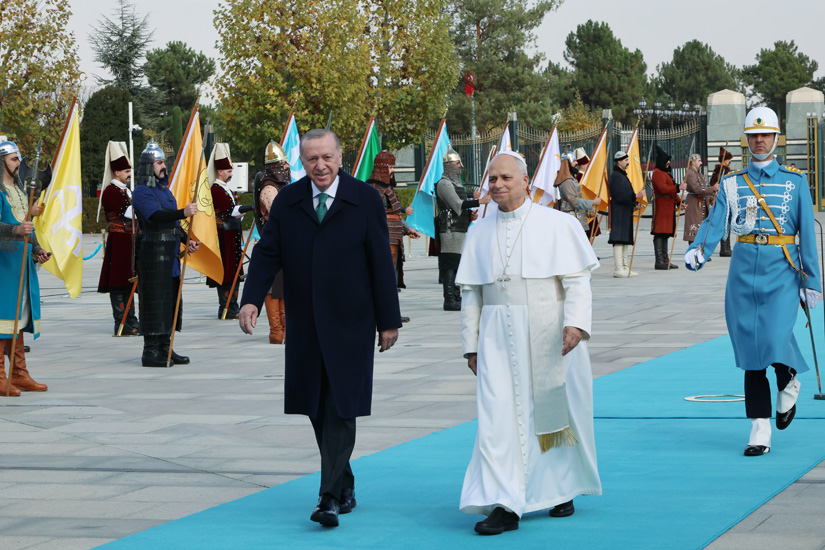
Pope Leo XIV, spiritual leader of 1.5 billion Catholics, is making his first overseas trip to Turkey since his May inauguration. The visit, which began Nov. 27 in Ankara, will continue through Nov. 30. The Pope’s trip aims to commemorate a key Christian anniversary and send a message of peace amid efforts to end the war in Ukraine and ease tensions in the Middle East.
In a rare diplomatic spat in the local language, the Russian and French diplomatic missions in Ankara traded barbs on social media over the ongoing war in Ukraine amid the war’s anniversary. The dispute, which drew attention from Turkish users, shifted from geopolitical accusations to historical insults and the use of emojis.
France, Britain and Ukraine signed a joint “statement of intent” after a meeting of the Coalition of the Willing in Paris, where nearly 30 Western leaders gathered. According to the statement, Britain and France will deploy troops to Ukraine in case of a peace agreement with Russia. Turkey is envisaged to take the lead in maritime security elements in the Black Sea.
Ukrainian naval drones struck two ships alleged to be part of Russia’s “shadow fleet” in the Black Sea off the Turkish coast, increasing tension in the shared sea even as the combatants pursue renewed peace talks. The Sea Baby drones hit the oil tankers MT Kairos and MT Virat on Nov. 28. Russia has used hundreds of tankers known as the “shadow fleet” to evade Western sanctions imposed after its invasion of Ukraine, delivering millions of barrels of oil to buyers in breach of those restrictions.

When Ukraine’s leader Volodymyr Zelenskyy landed in Ankara on Nov. 19, press reports had already started to make the headlines, revealing details of a peace plan drafted by the U.S. and Russia.
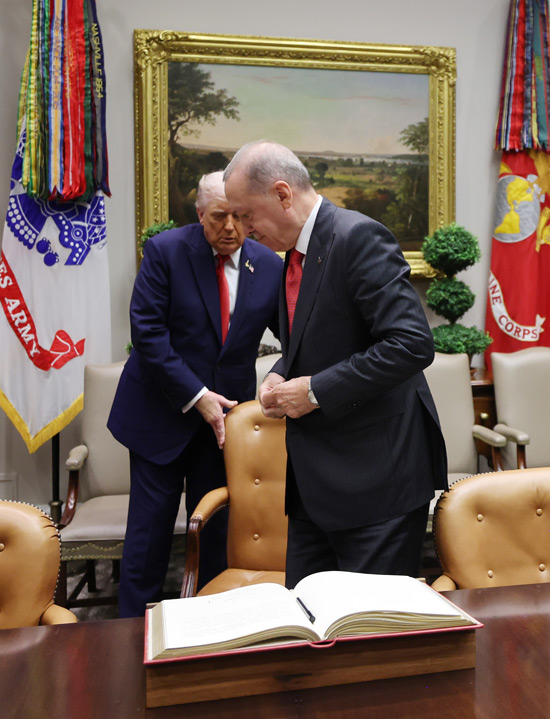
The first meeting in six years between President Recep Tayyip Erdoğan and U.S. President Donald Trump at the White House started with positive messages, as both refrained from directly addressing the issue of Gaza, on which they are at odds.Trump suggested the U.S. could lift sanctions on Turkey and allow it to buy U.S. F-35 jets, blocked due to Turkey’s procurement of S-400s from Russia, but added that he would like to see Turkey - a NATO member - stop buying Russian oil while the war in Ukraine continues. 'I'd like to have him stop buying any oil from Russia while Russia continues this rampage against Ukraine.'
President Recep Tayyip Erdoğan and French President Emmanuel Macron held a phone call on Aug. 21, their first direct contact since the NATO summit in June. The two leaders discussed Russia’s war in Ukraine, the crisis in Gaza, and bilateral cooperation, with Erdoğan again stressing Ankara’s interest in deepening defense ties with France. Both later shared posts on X, tagging each other in messages that underlined common concerns but also revealed different priorities. On bilateral ties, Erdoğan said Turkey valued closer cooperation with France, particularly in the defense industry, and wanted to keep advancing relations across multiple fields. Ankara has long sought approval from Paris to procure European air-defense systems. A green light for the sale of Eurosam GIE’s SAMP/T could accelerate Turkey’s plan to build its own missile shield, described as a “steel dome,” within two to three years.
As the dust settles from the economic shocks of the pandemic, the Ukraine war, and the breakdown of traditional supply chains, a new global order is taking shape—one where economic policy is no longer just about growth and trade but about power, resilience, and survival. Amid this transformation, Turkey stands at a crossroads: a country historically anchored to the West but increasingly drawn to non-Western alignments, and now forced to choose a direction in a fractured world.
The word of the week is “ihtiyatlı iyimserlik,” literally, “cautious optimism.” A staple of diplomatic jargon, the phrase allows diplomats, speechwriters, and strategists to sound hopeful without making any actual commitment. Last week alone, the term was trotted out as a reaction to the latest Damascus-SDF agreement, the ever-elusive prospect of a Ukraine-Russia ceasefire, and Syrian interim President Ahmad al-Sharaa’s pledge to establish an independent commission to bring those responsible for civilian killings in Latakia and Tartus to justice. And, yes, we are also cautiously optimistic about PKK leader Abdullah Öcalan’s calls to dissolve PKK and lay down arms, too.