
Analysis

In-Depth Analysis

Smart, independent reporting on Turkey's politics, economy and foreign affairs.

YANGIN
Word of the Week May 29, 2026

YANGIN

I had every intention of writing about düğün/wedding this week. Who could resist, after all, the cinematic absurdity of Jeff Bezos’s Venetian wedding extravaganza? It was the sort of wedding you'd rage over for its sheer insouciance over war, poverty, and environmental concerns: a three-day floating carnival of tuxedoed billionaires, Brazilian butts and a $2,000 bottle of tequila airlifted across continents because, apparently, Venice no longer has liquor stores. The bride wore archival Dolce & Gabbana; Ivanka looked pretty in pink and a German-Turkish Bezos lookalike desperately wanted to meet the couple and present a wedding gift. I was far too ready to bitch about arrogant extravagance and muse on Turkish weddings, those long, loud, gold-pinned affairs where uncles compete in folkloric footwork and everyone pretends the damat's family is not agonizing over the costs…
Editorial Team
HALKI EMERGES AGAIN AS A TEST OF TURKEY’S RELIGIOUS POLITICS
Foreign Affairs May 15, 2026

HALKI EMERGES AGAIN AS A TEST OF TURKEY’S RELIGIOUS POLITICS

A historic sanatorium on Heybeliada — the island also known as Halki — is set to be transferred to the Directorate of Religious Affairs for the second time, after a previous transfer was annulled by a court. The move comes as the same island is at the center of another religious question: the possible reopening of the Greek Orthodox Halki Seminary.

Editorial Team
ANKARA WANTS NATO TO LOOK SOUTH AS MUCH AS NORTH
Foreign Affairs May 15, 2026

ANKARA WANTS NATO TO LOOK SOUTH AS MUCH AS NORTH

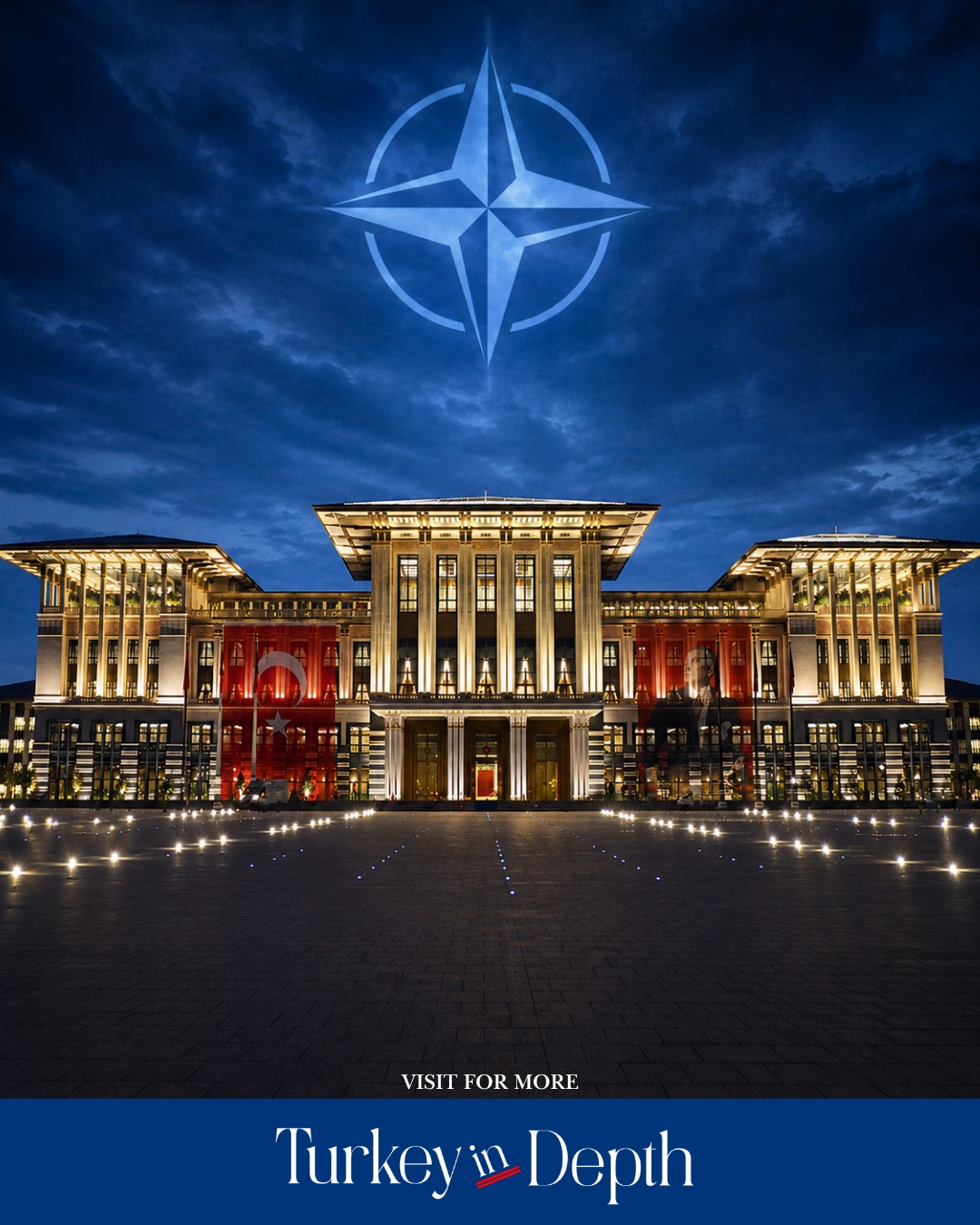
Turkey wants NATO to address threats from all directions — including from Middle Eastern countries — during the Ankara Summit on July 7-8. 'We are reminded that what happens in the south does not stay in the south,' said Ambassador Mehmet Burçin Gönenli, director general for International Security Affairs at the Foreign Ministry, speaking at the 18th Istanbul Security Conference organized by Başkent University and the Konrad-Adenauer-Stiftung.

Editorial Team
THE SWORD AND AUDI OF ALİ ERBAŞ
Portrait of the Week Sep 19, 2025

THE SWORD AND AUDI OF ALİ ERBAŞ

Religious Affairs Directorate head Ali Erbaş’s term has come to an end. He held the post for eight years. In other words, during the last eight years of the ruling party’s 23-year tenure, Turkey’s religious life was under Erbaş’s administration. Heads of the directorate, known as the Diyanet in Turkish, have always been subjects of debate, but Erbaş has been at the very peak of this controversy.

Anonymous
NEW HEAD OF RELIGIOUS AFFAIRS APPOINTED
Inside Turkey Sep 19, 2025

NEW HEAD OF RELIGIOUS AFFAIRS APPOINTED

President Recep Tayyip Erdoğan has appointed Istanbul Mufti Professor Safi Arpaguş as the new head of Turkey’s Religious Affairs Directorate (Diyanet), replacing Ali Erbaş, whose term has ended after the completion of his term, according to a decree published in the Official Gazette.

Editorial Team
TURKEY'S DREAM OF REGIONAL DOMINANCE MEETS NEW CHALLENGES
Guest Voices Feb 28, 2025

TURKEY'S DREAM OF REGIONAL DOMINANCE MEETS NEW CHALLENGES

Turkey’s overzealous Foreign Minister Ahmet Davutoğlu, who became prime minister in 2014 only to be sacked by Erdoğan a short while later, once bragged that not even a leaf could move in the Middle East without asking Turkey.  It was a time when Ankara was extremely confident about its influence in the region, especially in Syria. However, the Assad regime proved to be much more resilient than thought, thanks to Russia’s support. During this period, Turkey’s influence in Syrian affairs was doubted and even ridiculed by critics of the Ankara government. Recep Tayyip Erdoğan actually tried in vain several times to start direct talks with Bashar Assad through Russian channels.

Editorial Team
KAYYUM
Word of the Week Nov 8, 2024

KAYYUM

Kayyum or Kayyım (trustee, noun) often crops up on the Turkish agenda like an unwelcome ex-chief at a political celebration. The English-language media has translated it as trustee, as in “Turkey sacked three mayors in the Kurdish-majority southeast on alleged 'terrorism' charges and replaced them with trustees.” But as with most things, context is key. The word is actually an exalted name in Islamic theology, describing an attribute of God: the eternal, self-sustaining one, who maintains all existence. The term implies omniscience and omnipotence—qualities far removed from the bureaucratic function of trustee appointments. In more everyday language, it’s also a term for a mosque custodian. But lately, Turkey’s government has repurposed the term, applying it to officials appointed to oversee (or seize) the operations of private companies, foundations, and -mostly- municipalities suspected of wrongdoing. It should not be confused with a guardian (vasi), whose role implies that the person they care for is legally incapable of managing their own affairs. Tanıl Bora, master of Turkish political terms, explains: “A guardian is appointed to a person, a kayyum to property.”

Nazlan Ertan