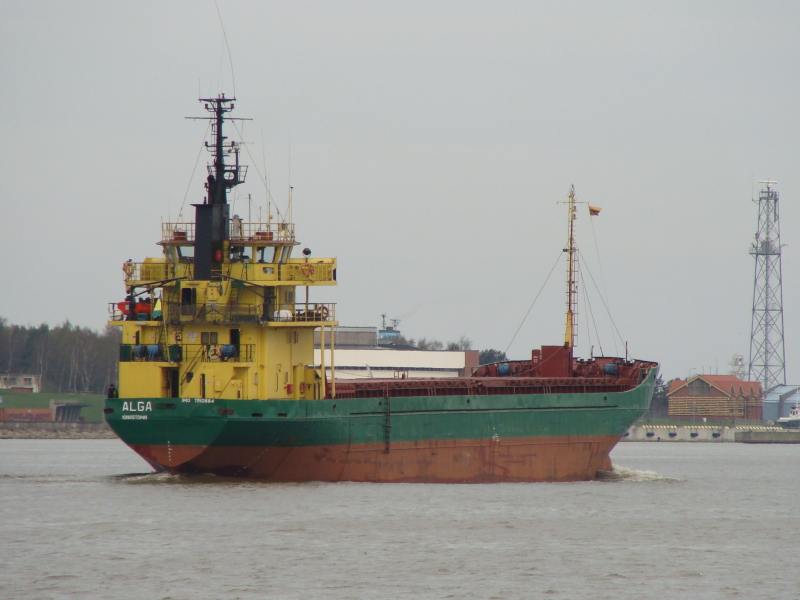
TURKISH-OWNED SHIP SUNK IN BLACK SEA, ANKARA WARNS BOTH UKRAINE AND RUSSIA
A Turkish-owned commercial cargo ship sank in the Black Sea following an Unmanned Aerial Vehicle (UAV) attack, killing all 10 crew members on board, BBC Turkish reported.
Analysis
Smart, independent reporting on Turkey's politics, economy and foreign affairs.
A Turkish-owned commercial cargo ship sank in the Black Sea following an Unmanned Aerial Vehicle (UAV) attack, killing all 10 crew members on board, BBC Turkish reported.

Maritime trade in the Black Sea has come to a near halt due to Russian and Ukrainian strikes, creating a major economic threat for Turkey, according to a shipping executive.
Turkey urged Russia and Ukraine to safeguard civilian navigation in the Black Sea after Turkish-owned cargo ships were hit by drones. Ankara refrained from blaming either side for the attack, instead calling on both warring parties to immediately ensure maritime security, on Aug. 4.
Foreign Minister Hakan Fidan carried a pointed message to Kyiv: Turkey does not want the Russia-Ukraine war spilling into the Black Sea.
Conflicts in the Strait of Hormuz and the naval warfare in the Black Sea have underscored the critical importance of mine countermeasures.
Blue Homeland-26, one of the Turkish Armed Forces’ most extensive exercises this year, was conducted from April 3 to 9 in the Black Sea, the Aegean Sea, and the Eastern Mediterranean, with the participation of 120 ships, 50 aircraft, and 15,000 personnel from the Naval, Land, and Air Force Commands, as well as the Coast Guard Command.
An unmanned surface vessel manufactured in the U.S. was found washed ashore in the Ünye district of Ordu, on the Black Sea coast, on March 21. An unmanned surface vessel (USV) of unknown origin struck the Altura, a Sierra Leone flagged tanker which is owned by a Turkish company, Pergamon Maritime, on March 26 in the Black Sea, 15 miles off the coast of the Bosphorus Strait.
France, Britain and Ukraine signed a joint “statement of intent” after a meeting of the Coalition of the Willing in Paris, where nearly 30 Western leaders gathered. According to the statement, Britain and France will deploy troops to Ukraine in case of a peace agreement with Russia. Turkey is envisaged to take the lead in maritime security elements in the Black Sea.
The Turkish Air Force shot down a drone that entered Turkish airspace from the Black Sea on Dec. 15 but Ankara refused to identify it, although all indications point to Russia.
Russian and Ukrainian envoys in Ankara were warned not to wage their war in Turkish territory. The warning came as tensions in the Black Sea in the first half of December escalated to fresh peaks in the four-year-old war.
Ukrainian naval drones struck two ships alleged to be part of Russia’s “shadow fleet” in the Black Sea off the Turkish coast, increasing tension in the shared sea even as the combatants pursue renewed peace talks. The Sea Baby drones hit the oil tankers MT Kairos and MT Virat on Nov. 28. Russia has used hundreds of tankers known as the “shadow fleet” to evade Western sanctions imposed after its invasion of Ukraine, delivering millions of barrels of oil to buyers in breach of those restrictions.
We’ve borrowed the headline from a famous Turkish pop song of the 1970s, “Çilli Bom Bom.” One verse goes: “Don’t leave today’s work for tomorrow / Seize the moment, don’t hesitate / The world turns fast, life is short / Tomorrow won’t do—it has to be now.” Ekrem İmamoğlu could be said to be “impatient.” Like in the song, he’s in a hurry. But to explain this as a mere character trait would be insufficient. Some attribute his impatience to being from Trabzon — in other words, a typical Black Sea temperament — but geography alone cannot explain it either.