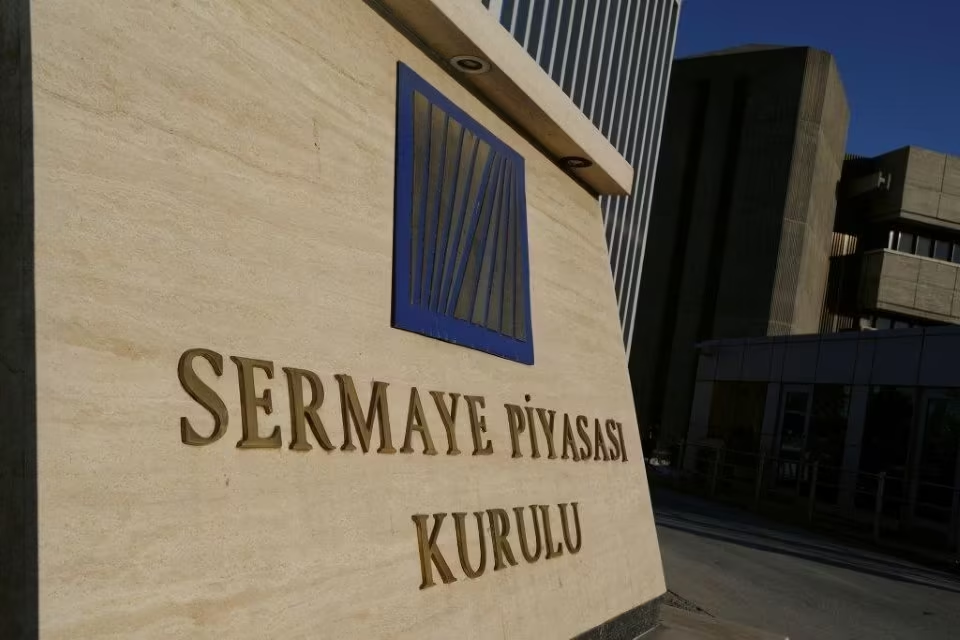
BRIBED IN, SQUEEZED OUT: AN IPO TALE FROM BURSA
With the investment fund scandal still unfolding, a new allegation has come to light: companies were asked for bribes to secure approval from the Capital Markets Board (SPK) to go public.
Analysis
Smart, independent reporting on Turkey's politics, economy and foreign affairs.
With the investment fund scandal still unfolding, a new allegation has come to light: companies were asked for bribes to secure approval from the Capital Markets Board (SPK) to go public.

Foreign Minister Hakan Fidan traveled to Libya on Aug. 11 and 12, visiting both Tripoli and Benghazi, in what appears to be the first time a Turkish foreign minister has made a simultaneous visit to meet competing sides in the Libyan conflict.

Turkish democracy is the casualty of Europe’s rediscovery of Turkey’s strategic value. To better understand the context of German Chancellor Friedrich Merz’s visit to Ankara next week, one has to go back to the end of the Cold War. Whereas European countries have benefited from the peace dividend, the contrary happened for Turkey in the aftermath of the fall of the Iron Curtain. After enjoying the relative stability of the bipolar order of the Cold War era, Turkey found itself in the midst of several conflict zones. While most European countries downsized their defense budgets, Turkey had no such luxury. The fight against separatist terrorism, the turbulence created by the Gulf War, and regional conflicts like the ones in the Caucasus dictated the maintenance of a big and well-equipped army.
“We’re from Adana, we’re God’s men.” If you ever visit Adana, you’ll hear this phrase—it’s on the lips of nearly every local. It’s like a common slogan, spoken across party lines, and always in the distinct Adana dialect. Adana Mayor Zeydan Karalar, arrested in this week’s wave of detentions targeting CHP municipalities, often uses this saying himself. He even printed posters featuring the phrase and released a video claiming it originated among troops from Adana during the 1915 Battle of Gallipoli.
Kayyum or Kayyım (trustee, noun) often crops up on the Turkish agenda like an unwelcome ex-chief at a political celebration. The English-language media has translated it as trustee, as in “Turkey sacked three mayors in the Kurdish-majority southeast on alleged 'terrorism' charges and replaced them with trustees.” But as with most things, context is key. The word is actually an exalted name in Islamic theology, describing an attribute of God: the eternal, self-sustaining one, who maintains all existence. The term implies omniscience and omnipotence—qualities far removed from the bureaucratic function of trustee appointments. In more everyday language, it’s also a term for a mosque custodian. But lately, Turkey’s government has repurposed the term, applying it to officials appointed to oversee (or seize) the operations of private companies, foundations, and -mostly- municipalities suspected of wrongdoing. It should not be confused with a guardian (vasi), whose role implies that the person they care for is legally incapable of managing their own affairs. Tanıl Bora, master of Turkish political terms, explains: “A guardian is appointed to a person, a kayyum to property.”