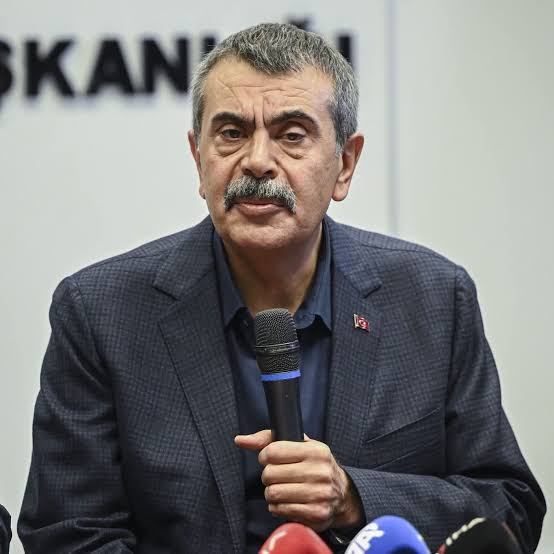
MINISTER PLEDGES RESPONSE TO WAVE OF SCHOOL VIOLENCE
The education minister described a wave of lethal violence in schools as a “sickness” and suggested social media is to blame.
Analysis
Smart, independent reporting on Turkey's politics, economy and foreign affairs.
The education minister described a wave of lethal violence in schools as a “sickness” and suggested social media is to blame.

Education Minister Yusuf Tekin, no stranger to controversy, has provoked a backlash after announcing a change to the newly updated national school curriculum that renames the War of Independence.
Turkey's language learning landscape is undergoing a sharp transformation, with German and Korean emerging as the two most sought-after languages in the country, Sözcü reported.
While mass school shootings remain rare in Turkey, the back-to-back attacks in Şanlıurfa and Kahramanmaraş have intensified calls for the resignation of Education Minister Yusuf Tekin, as discussions on the increasing violence in education system have come under scrutiny.
President Recep Tayyip Erdoğan made a U-turn about the oath sworn by cadets graduating from a military academy in which they drew their swords and promised to be the soldiers of Turkey’s founder Mustafa Kemal Atatürk in protecting secularism in the country. “Against whom are you drawing these swords?” asked Erdogan eight days after the incident, joining the chorus that associated the unofficial oath with the military tutelage that Turkey suffered in the past. Then, arguing that the new graduates had fallen into a trap set by others, he told a workshop arranged for religious high school graduates that he would fire those who had influenced the cadets.
The secularism-versus-religion debate continues in full force, with the ruling alliance fueling tensions after a father who objected to the use of a religious hymn as a school bell at his child’s school in Kocaeli’s Derince district was detained.
Turkey has once again been drawn into a debate over secularism after Education Minister Yusuf Tekin issued a circular instructing schools to organize Ramadan-themed activities, including the preparation of a “Ramadan checklist” for students.
Allegations that vocational high school students interning at the Parliament cafeteria were sexually abused by staff have sparked public outrage. The scandal surfaced after a 16-year-old intern reported the abuse and presented incriminating messages to law enforcement.
Allegations of widespread cheating in Turkey’s national High School Entrance Exam (LGS) have triggered a political storm, with opposition figures accusing the Education Ministry of negligence and a cover-up, while Minister Yusuf Tekin has forcefully rejected the claims, using inflammatory language to discredit critics. More than a month after the exam, a senior official from the ministry has been dismissed.
A Turkish ambassador serving in a Central Asian country before 2016 was criticized for not showing enough interest in the Gülenists schools. The envoy received several phone calls from AKP officials complaining he was not, for instance, visiting the schools frequently enough.
Hats off to Yusuf Tekin, Turkey’s controversial education minister, for cramming all of Turkey’s thorny subjects into a single speech and creating a debate that drew in political party leaders, actresses, and laymen. It was a performance to steal the limelight from Trump, let alone Erdoğan himself. The Erzurum-born minister, who launched a controversial new curriculum last year, traveled from Baku to Batman, where he presents his education strategy to a large audience. On Nov. 17, he attended COP29 in Baku, where he explained how environmental awareness was now part of the Turkish education system. His critics would say he referred to the controversial project called CEDES, an acronym for “I protect my environment and claim my values.” The project does have an environmental focus, but it also has a “religious values” component under which local imams and preachers are assigned to each school in the project to provide spiritual guidance for students.
In case you have yet to notice, the Presidential Couple loves marriage, family, and many children. This love, of course, is echoed in policy-making. Since the AKP came to power, the government has introduced a series of measures to encourage young people to get married, including subsidies and housing for university students who want to get married while still at school and “marriage credits,” long-term, low-interest loans for those between 18 and 30.