
THE STATE AND THE STAGE
Foreign policy has always liked theater, costumes and masks. Peace conferences, state visits, summit handshakes, seating plans, flags, solemn declarations. All belong to the choreography of international life.
Analysis
Smart, independent reporting on Turkey's politics, economy and foreign affairs.
Foreign policy has always liked theater, costumes and masks. Peace conferences, state visits, summit handshakes, seating plans, flags, solemn declarations. All belong to the choreography of international life.
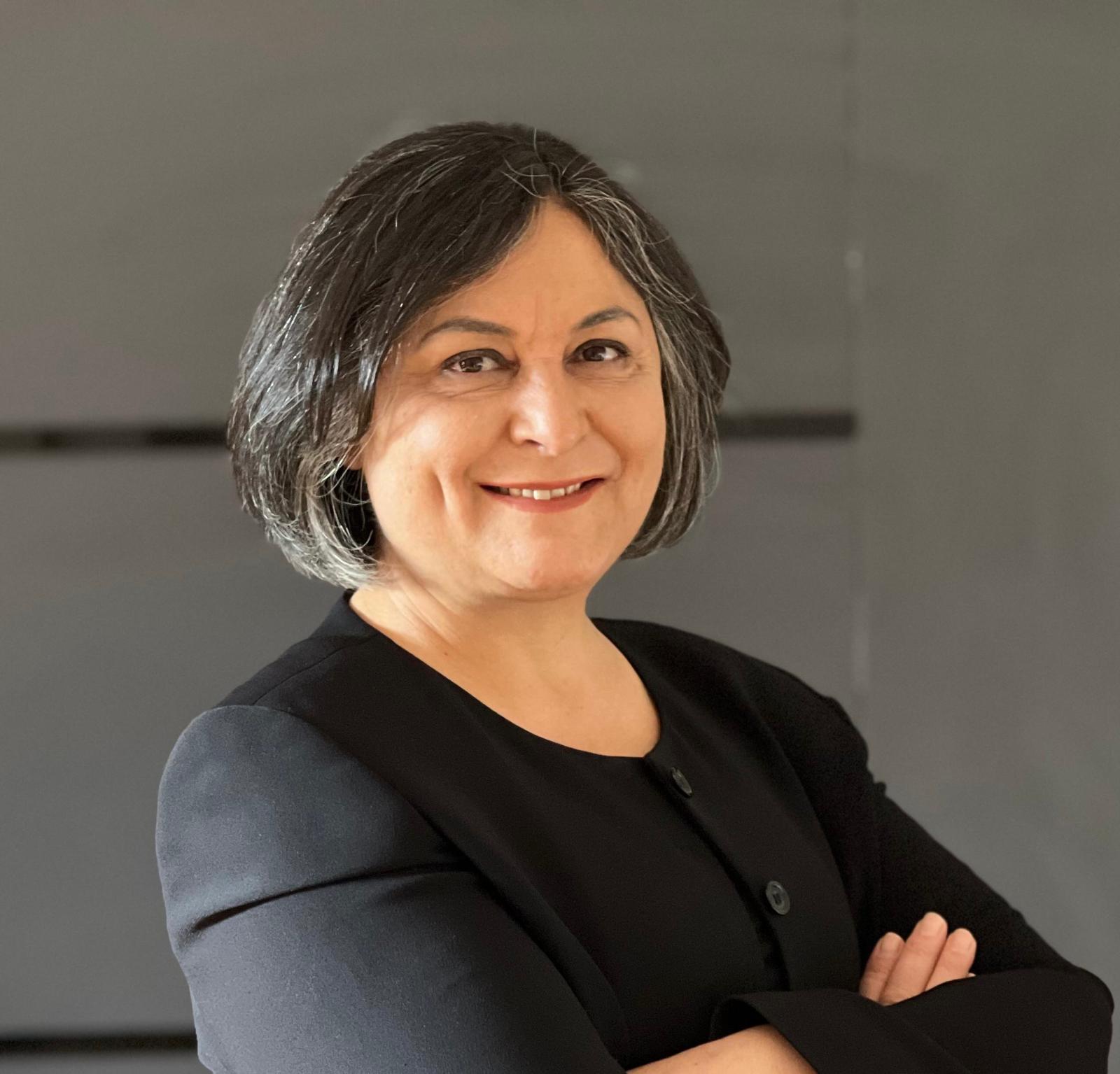
The “process report” that charts the roadmap for Parliament toward solving the Kurdish question has been finalized. The document did not push the limits of the AKP and MHP too far; it received a cautious “hopeful” endorsement from the CHP on the grounds that accepted democratic demands “must not remain mere words on paper”; the DEM Party deemed it “better than nothing” despite its shortcomings; and the Yeni Yol group welcomed with a familiar “not enough, but yes.”
This week, a century-old star of the stage passed away. He was 98. He had spent 70 of those years performing. The theater has bid farewell to one of its last great masters, Haldun Dormen. Despite this being a death, I chose a title that contains no word of mourning: “Goodbye, my sweet.” It may not appeal to everyone, but it suits Dormen.
Feti Yıldız is not a “latecomer” but a nationalist raised in the movement — a core MHP figure. With the Kurdish peace process, he became the party’s most visible face after Devlet Bahçeli. At 71, he carries the aura of a character who stepped out of the classic Yeşilçam cinema of the 1970s, and onto the political stage — as if he came from there, yet without acting. He simply is who he is. Of course, he is not the lead role; that belongs to Bahçeli. But even if Yıldız looks like a character actor, his strength lies in being exactly what he appears to be. He is not one of those shapeshifting politicians. He steers clear of the MHP’s trademark overblown patriotic rhetoric. He avoids slogans. He usually answers journalists’ questions by staying within the framework of his profession — the law.
The State Theaters have recently come under the spotlight due to a protest. The incident took place during the traditional Afife Jale Awards ceremony. Who was Afife Jale? In the early 20th century, when Istanbul was still under occupation, she became the first Turkish woman to appear on stage. The awards are presented every year in her memory.
Who is Ayşe Barım? Those who should know her, don’t. The people of this country—who have lived all their lives below the poverty line, and not even all of them, only a few—first heard her name in the news bulletins. When? Exactly 248 days ago, when she was arrested. They didn’t know Ayşe Barım, but in the evenings they gathered with their families or friends, cracking sunflower seeds and watching TV dramas with excitement. Yet those viewers had no idea what was happening behind the screen. Behind the mesmerizing shows they watched so devotedly stood an unknown figure. Under the headlines “Çağlayan Courthouse / Silivri Prison,” Ayşe Barım was forced—by the hand of the judiciary, not by her own will—to step onto the stage from behind the curtains.

When a European expert based in Bulgaria received an invitation to a conference in Tbilisi, he decided to take the maritime route, boarding the ferry from Burgaz to Batumi. At one stage of the 64-hour crossing, while sailing in the open sea, the ferry shut its transponder and turned off its lights. A Russian fuel tanker approached and docked with the ferry to provide fuel to the ship, which is mainly used by trucks. The expert later found out that Russia sold the fuel 30 to 40 percent less than the market price. The captain of the ferry confessed he had all the official documents proving that the fuel was purchased from Romania.

Merve Göntem, screenwriter of the popular TV series Kızılcık Şerbeti (Cranberry Sorbet), was detained at her home in Istanbul’s Cihangir district over comments made during a YouTube interview four years ago.
The 11th session of Turkey’s parliamentary commission on the Kurdish peace process saw its first major confrontation, as comments from an Islamist group sparked a dramatic walkout by members of the DEM Party.
Turkey’s main opposition CHP suffered a fresh blow as a court dissolved its largest provincial board in Istanbul over cash payment claims. The party now awaits either a Sept. 5 ruling by the Supreme Election Board (YSK) or a Sept.15 court hearing that could unseat Chair Özgür Özel’s administration. The CHP, which came to power at a November 2023 congress with the slogan “Change,” now risks being replaced by the team of former chair Kemal Kılıçdaroğlu. The 45th Civil Court of First Instance ruled that irregularities in the October 2023 Istanbul provincial congress were “approximately proven.” The court suspended provincial chair Özgür Çelik, the executive and disciplinary boards, and 196 delegates. Attention has now turned to another court set to review the CHP’s 2023 congress in Ankara. “The Istanbul decision is null and void. We do not recognize it,” said Özel, vowing not to hand over CHP’s Istanbul building to the appointed administration. The Istanbul administration also started a stage-in protest in front of the building for 24 hours.
In Turkey, a köprü (bridge) is never just a bridge. This week, the Bosphorus Bridge—officially renamed the “15 July Martyrs Bridge” after the 2016 coup attempt—became a stage for protest. A group of CHP deputies climbed onto the structure and unfurled a massive banner reading: “Free İmamoğlu” right before the CHP leader and his guests from the Socialist International would cross it. The message was direct: release Istanbul’s elected mayor, jailed on charges widely condemned as political. Only a few hours before that, the members of the Socialist International had raised a similar banner in their meeting.
In Turkish, “normal doğum” refers to vaginal birth. But the term itself is anything but neutral. By naming one method “normal,” it quietly casts others — cesareans in particular — as “abnormal”. For women who undergo C-sections, whether for medical reasons or out of their own choice, the implication is clear: you failed to deliver the “natural” way. In fact, a Health Ministry ran a public ad two years ago that did just that: in a clumsily-shot clip, a baby just delivered by vaginal birth tells the mother that they “succeeded.” The contested term has once again taken center stage — not in a hospital, but on a football pitch.