TURKEY SIGNS ENERGY DEALS WITH CHINA AND CANADA
Turkey signed two energy deals with China and Canada on Nov. 12 during the COP31 climate summit. The agreements aim to help the country build more clean power sources and new nuclear plants.
Analysis
Smart, independent reporting on Turkey's politics, economy and foreign affairs.
Turkey signed two energy deals with China and Canada on Nov. 12 during the COP31 climate summit. The agreements aim to help the country build more clean power sources and new nuclear plants.
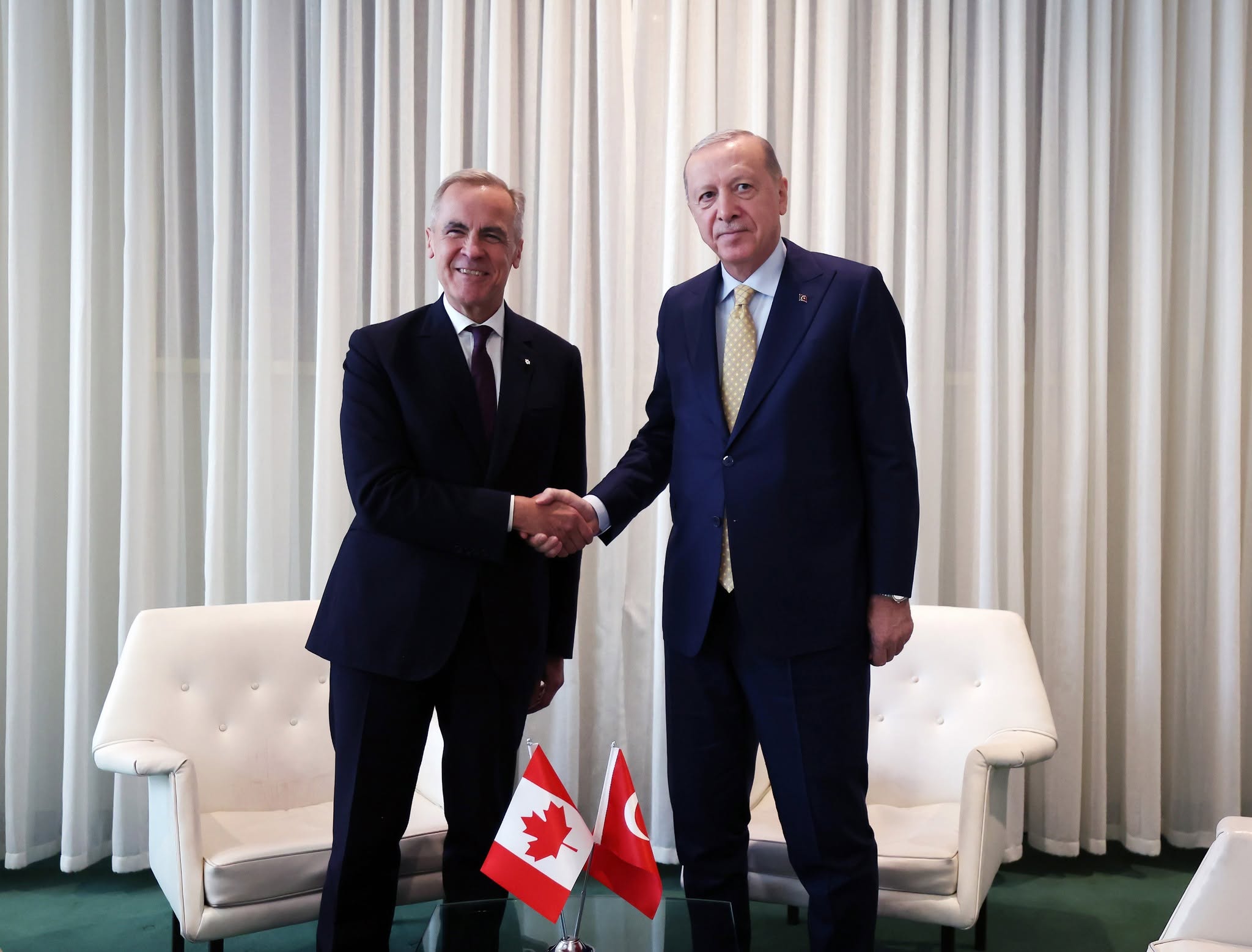
The first bilateral visit by a Canadian prime minister yields deals on defense, energy and air transport as Ottawa seeks to reduce its reliance on the US and makes a sharp U-turn toward finding alternative partners.

Erdoğan meets Putin in Bishkek, 'privileged partner' praised anew, Akkuyu's first reactor nears go-time, more nuclear deals in view.

Companies showcased $70 billion in products to state leaders at the defense industry forum that took place alongside the NATO Summit in Ankara.
There is a way of establishing a working relationship with U.S. President Donald Trump. First you have to make sure you see him as a smart, respectable world leader. That’s the easy part. Then you have to lure him with trade deals, making sure he is the winning side. Therefore, it comes as no surprise when Turkey unilaterally dropped its retaliatory tariffs on U.S. products on Sept. 22, a few days before the scheduled meeting between President Recep Tayyip Erdoğan and U.S. President Donald Trump at the White House. Buzzwords are important for Trump, and tariff is one of them. The tariffs, which covered products including passenger cars, fruit, rice, tobacco, alcoholic beverages, solid fuels, and chemical products, were introduced in 2018 in response to U.S. tariffs on steel and aluminum imports enacted during Trump's first term in office.

The free trade agreement between the European Union (EU) and India has reopened an old wound in Turkey–EU relations, once again exposing the long-standing impasse over trade integration with Ankara.
The European Union’s push to conclude free trade agreements (FTAs) is reshaping the economic landscape around its periphery. Chief among these is the long-negotiated EU–Mercosur Trade Agreement, alongside accelerating talks with India. While these agreements are formally bilateral between the EU and third parties, their implications extend well beyond signatories. For Turkey, which is bound to the EU through a customs union covering industrial goods, these deals carry direct consequences—despite Ankara not being a negotiating party.
İYİ Party Chair Müsavat Dervişoğlu condemned the parliamentary visit to İmralı, calling it a “national disgrace” and asserting that there is no statute of limitations for what he described as betrayal. İYİ Party deputy Alpaslan Yüce resigned from his party, saying it had abandoned its founding centrist ideals.
Donald Trump’s “Liberation Day” tariffs continue to shake the global economy and wreak havoc. Although President Trump announced a 90-day pause for most countries on April 9, letting markets soar after days of economic turmoil, he decided to hit China with further tariffs of an unprecedented 125%. There is no question that this will deepen the trade war with China. Regardless of the tariff pause, all major countries are still reflecting on worst-case scenarios. It is highly disputable whether President Trump will achieve his declared goal of striking fair and balanced trade deals with America’s partners. Let us hope that common sense will prevail and tariffs will be mutually lowered to reasonable levels through negotiations. However, given President Trump’s dithering, there is nothing but turmoil and chaos to be expected on the horizon.