TWO FACES OF THE PROCESS: DISARMAMENT, YES. DEMOCRATIZATION, NOT YET
Two years into the PKK’s disarmament process, fears of stalling have resurfaced. DEM Party Co-Chair Tuncer Bakırhan put it plainly: “The pace of the process has slowed.”
Analysis
Smart, independent reporting on Turkey's politics, economy and foreign affairs.
Two years into the PKK’s disarmament process, fears of stalling have resurfaced. DEM Party Co-Chair Tuncer Bakırhan put it plainly: “The pace of the process has slowed.”
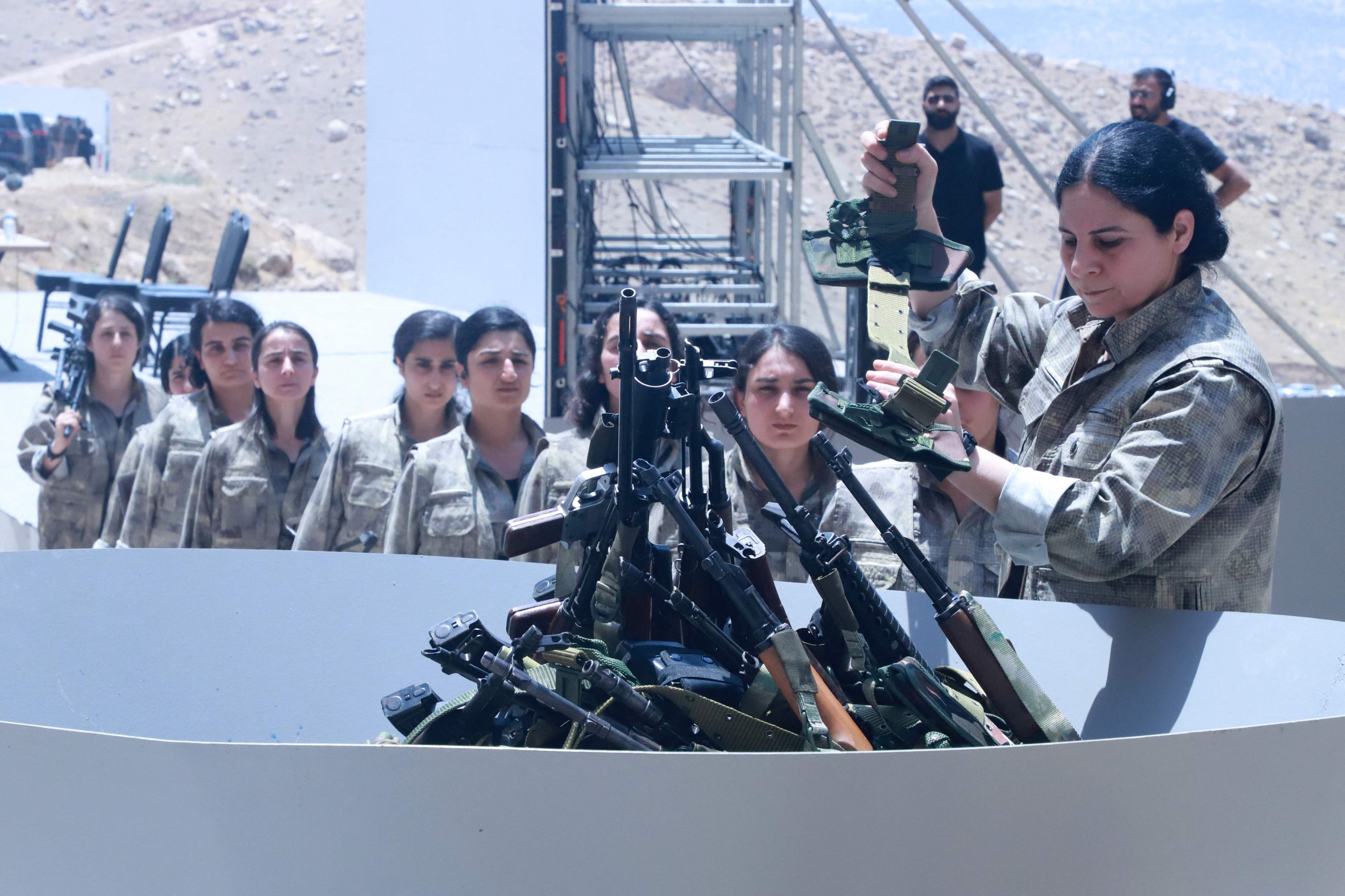
With the start of the new legislative year on Oct. 1, the main agenda will be the ongoing peace process concerning the Kurdish issue, which faces gridlock about the timing of demands over disarmament, legal guarantees, and the official status of jailed PKK leader Abdullah Öcalan.
The first concrete step has been taken in the PKK's disarmament process, a subject Turkey has been discussing for nearly 22 months. The law that will form the legal groundwork for the group's disarmament passed parliament with what has been called a 'historic consensus.' Next comes implementation. But the real question is will this process, dubbed 'Terror-Free Turkey,' contribute to the country's democratization?
Debate is underway over how the political balance will shift after the “Framework Law,” which establishes the legal basis for the PKK’s disarmament process, passed the 600-seat parliament with a record 467 votes. The overwhelming support for the law is expected to whet the government’s long-standing appetite for a “new constitution.” But is that possible before the general election, now 20 months away if held on schedule?
The “framework law” that will provide the legal basis for the PKK’s disarmament process appears set to be enacted after nearly five months of waiting. Öcalan’s view that “even if it is incomplete and inadequate, a step needs to be taken” proved instrumental in overcoming the disputes surrounding the law. In a sense, it was Öcalan who untied the knot.

Legislation designed to ensure the surrender of thousands of armed Kurdish militants will be passed before the end of the summer as the government tries to push the high-tension disarmament process over the line, according to remarks from Parliament Speaker Numan Kurtulmuş.
The DEM Party is pushing the government to start taking legislative steps for the Kurdish peace process by announcing a framework law, yet the government is determined not to take any step before the PKK’s disarmament has been verified and confirmed. DEM
Turkey’s newly formed National Solidarity, Brotherhood and Democracy Commission—tasked with preparing the framework for the PKK’s disarmament—has held its first meeting thanks to a rare cross-party consensus in parliament. The eight-hour session marked a symbolic start to what could become a historic process.
Hopeful for the disarmament of the PKK after the ceremonial burning of arms, the Turkish government is observing developments on the ground while efforts to establish a commission in the parliament look set to drag into next week. Parliament Speaker Numan Kurtulmuş visited MHP and CHP chairs, but the commission’s structure and name were not finalized. Now, he is expected to meet once again with the parliamentary group deputy chairs. The meeting, initially planned for July 25 is expected to be postponed to July 28 at the earliest. After the framework is set, commission members will be appointed. While the head of Turkish intelligence, İbrahim Kalın, toured all the party groups in the parliament, the media tracked a tempest in a teapot after MHP Chair Devlet Bahçeli confirmed reports that he proposed appointing two vice presidents—one Kurdish and one Alevi.
All eyes are on Sulaymaniyah in northern Iraq, where the first group of PKK members is set to disarm on July 11 — the organization’s first act of disarmament since its founding nearly 50 years ago. This symbolic ceremony follows the PKK’s May 12 announcement of its decision to disband. Depending on when subscribers opt to read this issue, the footage may have already surfaced.
The PKK’s disarmament, which has now stretched beyond a year and a half, has stalled at precisely the most critical stage — the point at which the state is expected to take action. Unless the government softens its precondition that “the disarmament process must first be fully completed,” the expected legal steps will likely be postponed until the new legislative year in October. The risks posed by delay are being discussed and meanwhile it also appears set to derail the transformation plans of the DEM Party, which has already started the countdown to a congress.
The steps expected to be taken on the Kurdish peace process dominated discussions at the 106th anniversary of parliament's founding. President Recep Tayyip Erdoğan insisted that the process was proceeding 'honorably' in reply to the pro-Kurdish DEM Party’s demand for bolder legislative action, while the parliament speaker blamed delays on missed disarmament deadlines.