
SERBIAN PRESIDENT’S VISIT UNANNOUNCED UNTIL LAST MINUTE
President Recep Tayyip Erdoğan hosted Serbian President Aleksandar Vučić in Ankara, but his visit was kept off the public schedule until the last minute, Turkey in Depth has learned.
Analysis
Smart, independent reporting on Turkey's politics, economy and foreign affairs.
President Recep Tayyip Erdoğan hosted Serbian President Aleksandar Vučić in Ankara, but his visit was kept off the public schedule until the last minute, Turkey in Depth has learned.
Turkish President Recep Tayyip Erdoğan and Greek Prime Minister Kyriakos Mitsotakis met in Ankara on the 30th anniversary of the Kardak (Imia) crisis, serving as a reminder that the fundamental disagreements that nearly brought the two NATO allies to war 30 years ago remain unresolved.
President Recep Tayyip Erdoğan reshuffled his Cabinet, appointing Istanbul Chief Public Prosecutor Akın Gürlek as justice minister, replacing Yılmaz Tunç. Gürlek has long been a target of the main opposition, dating back to his tenure as head of Istanbul’s 14th Heavy Penal Court, and more recently since his appointment as chief public prosecutor in October 2024, amid a series of high-profile court cases. Interior Minister Ali Yerlikaya was also replaced, with Erzurum Governor Mustafa Çiftçi named to the post. Gürlek’s appointment is widely viewed as a promotion
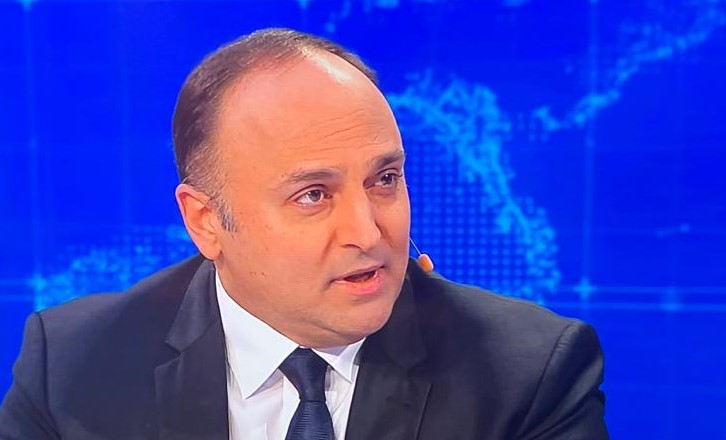
The planned meeting of the Turkish–Greek High-Level Cooperation Council (HLC) in Ankara on February 11 comes when the calm in relations between Ankara and Athens conceals numerous fragilities. That’s just one reason why the meeting between President Recep Tayyip Erdoğan and Prime Minister Kyriakos Mitsotakis is unlikely to produce a breakthrough. Rather, the meeting aims to keep communication channels open while both sides pursue sharply divergent agendas in the Aegean and Eastern Mediterranean.
Economic hardship has long been measured through the humble simit -— the sesame-covered circular bread sometimes called the Turkish bagel. Now the ruling AKP is being accused of shrinking even that symbol. Once used by President Recep Tayyip Erdoğan to show that a family could not afford a single simit and tea with the minimum wage, the calculation has taken a new turn: a simit divided into three.
Legal pressure on the main opposition CHP continued as allegations of drug use were expanded to include relatives of Ekrem İmamoğlu’s wife, while prosecutors finalized a separate “political espionage” indictment against the imprisoned presidential candidate. At the same time, an Istanbul court ordered the release of a high-profile mayor held on corruption charges, marking a notable shift in the broader judicial process. As a significant development in the ongoing corruption trials, the court ordered the release of Adana Mayor Zeydan Karalar, who had been in detention since July. Karalar became the first CHP mayor to be freed since the start of the Aziz İhsan Aktaş case on Jan. 27. Eight other employees of several municipalities were also released.
In their first call since unrest spread across Iran, President Recep Tayyip Erdoğan told his Iranian counterpart, Masoud Pezeshkian, that Turkey does not support any scenario involving external intervention in Iran, according to a statement from the Turkish Presidency on Jan. 22.
The EU’s draft “Made in Europe” proposal to support European producers of green technology excludes Turkey from “Europe” but allows the European Commission to determine which non-EU countries can be included in the scheme on a sectoral basis. The Turkish business community is alarmed at the new rules aimed at strengthening European manufacturing against rising competition from China and the U.S., Turkey in Depth learned. Fearing this would create a new hurdle in Turkey’s trade with the EU, business leaders have been lobbying in Brussels, urging officials to consider Turkey as part of Europe. Turkey in Depth has learned that President Recep Tayyip Erdoğan sent a letter to President of the European Commission Ursula von der Leyen regarding the decision.
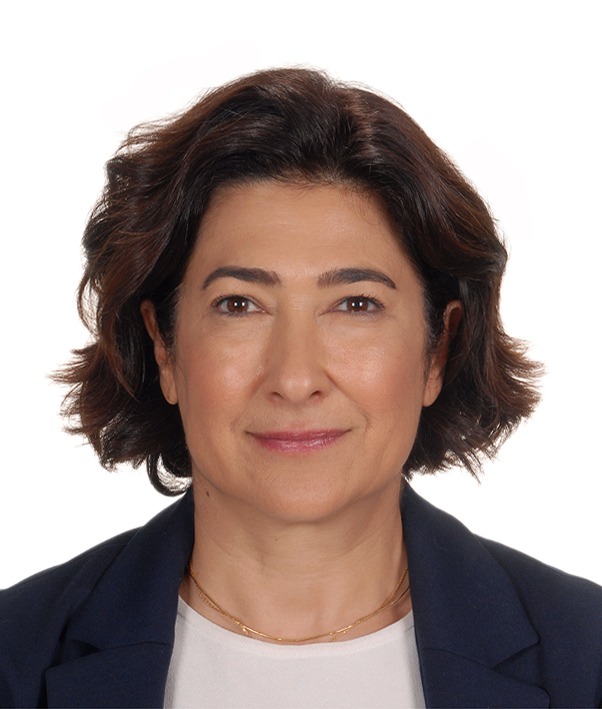
One would expect the bromance between U.S. President Donald Trump and Turkey’s President Recep Tayyip Erdoğan to reach new heights following the former’s recent disavowal of the PKK/YPG.
Turkey is watching the protests in Iran with growing concern, warning that U.S. President Donald Trump’s threat of intervention could trigger dangerous regional consequences as Ankara pushes de-escalation through diplomacy with Gulf countries.
An administrative court is expected to issue a ruling within 15 days in the case filed by jailed Istanbul Mayor Ekrem İmamoğlu challenging Istanbul University’s revocation of his university diploma — a decision that will determine his eligibility to run as a presidential candidate.
The abduction of Venezuelan President Nicolás Maduro by the United States has reignited a fierce debate in Turkey over the concept of the “internal front,” a term increasingly used by the government to call for national unity amid shifting global dynamics. The notion of “fortifying the internal front” — defined by the government as acting in unison on national issues — gained prominence alongside changes in the international order. It was President Recep Tayyip Erdoğan who first introduced the phrase in August 2024, and has repeatedly emphasized it over the past year as a shield against foreign policy challenges and a necessity for “national survival.”