
BAHÇELİ'S TRÇ PROPOSAL FALLS FLAT
President Recep Tayyip Erdoğan shows no interest in MHP Chair Devlet Bahçeli's proposal that Turkey, Russia, and China (TRÇ) should form an alliance against the U.S.-Israel coalition.
Analysis
Smart, independent reporting on Turkey's politics, economy and foreign affairs.
President Recep Tayyip Erdoğan shows no interest in MHP Chair Devlet Bahçeli's proposal that Turkey, Russia, and China (TRÇ) should form an alliance against the U.S.-Israel coalition.
Israeli Prime Minister Benjamin Netanyahu's reference to President Recep Tayyip Erdoğan over Jerusalem has sparked a new controversy between the two leaders.
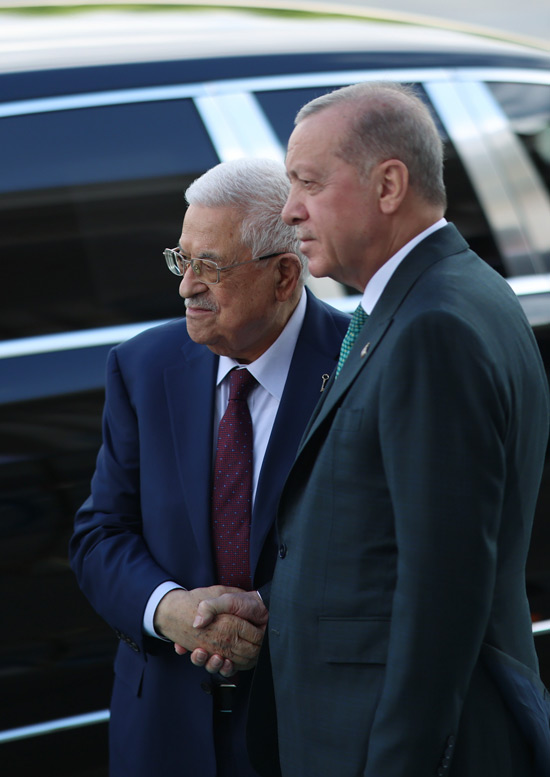
Soon after Israel launched a major ground offensive in Gaza City, President Recep Tayyip Erdoğan hosted Palestinian President Mahmoud Abbas for an unofficial visit in the Turkish capital.
MHP Chair Devlet Bahçeli has called for an alliance between Turkey, Russia, and China (abbreviated as TRÇ in Turkish) to counter what he described as the 'evil coalition' of the United States and Israel, which he said was 'challenging the world.'
Soon after Israel launched a major ground offensive in Gaza City, President Recep Tayyip Erdoğan is hosting Palestinian President Mahmoud Abbas for an unofficial visit in the Turkish capital.
Turkey’s parliament will convene on Aug. 29 for an extraordinary session to address Israel’s offensive in Gaza and possible humanitarian aid steps.
Turkey’s parliament will meet in an extraordinary session on Aug. 29 to discuss Israel’s offensive in Gaza and steps to deliver humanitarian aid.
“Turkish newspapers should do more than the Washington Post,” wrote Fatih Selek in pro-government daily Türkiye, recalling that the American newspaper published the names of nearly 20,000 children murdered in Gaza.
The debate kicked off following an article by journalist Zeynep Gürcanlı, who asked why Turkey did not join the statement issued by the Hague Group during their meeting in Bogota on July 16. Turkey was among 30 countries at the Bogota conference, yet opted not to sign the statement, which included measures against Israel. Among these measures are the denial of arms to Israel, a ban on ships transporting such arms, and a review of public contracts for possible links to companies that benefit from the Israeli occupation.
Turkey and the U.S. were the key backers of HTS - a former offshoot of ISIS turned Western ally - in its surprise victory over the Bashar Al-Assad regime in December. Ankara hoped this would give it a role in rebuilding Syria under the HTS and also help eliminate the PYD/YPG threat in north-eastern Syria. However, neither goal materialized. Only seven months after the power change in Damascus, it is not Turkey, but Israel, followed by the U.S. and Saudi Arabia that are now influential in Syria. Although Turkey remains dominant in the occupied northern strips of Syria, it failed to establish new bases, let alone an airbase in mid-Syria, because of Israel’s opposition.
A Turkish ambassador serving in a Central Asian country before 2016 was criticized for not showing enough interest in the Gülenists schools. The envoy received several phone calls from AKP officials complaining he was not, for instance, visiting the schools frequently enough.
Despite strained ties with Israel following the October 7 attacks, Turkey has emphasized its key role in brokering a ceasefire in Syria’s Suweida province, where fighting between Israel-backed Druze groups and Bedouin Arab tribes had escalated to involve regime forces.