
CENTRAL BANK CUTS CREDIT CARD INTEREST RATES
The Central Bank reduced the calculation margins for credit card cash advances and overdraft account interest rates by 25 basis points.
Analysis
Smart, independent reporting on Turkey's politics, economy and foreign affairs.
The Central Bank reduced the calculation margins for credit card cash advances and overdraft account interest rates by 25 basis points.
The firing tests of the armed unmanned surface vehicle Sancar, developed in collaboration between Havelsan and Yonca Technical Shipyard, have been completed in the Sea of Marmara.
Here at the tail end of the tourist season, the word of the week writes itself: konukseverlik, hospitality, or, in its Ottoman-tinted oldspeak, misafirperverlik. Every guidebook swears Turks are preternaturally welcoming; the national branding machine isn’t shy about it either. Yet while “hospitality” is the country’s trusty calling card, the numbers are more than brochure copy. Turkey received 23.6 million foreign visitors in the first half of 2025, marking an increase of 15.9% year-on-year, as tourism revenues hit a record $24.6 billion. By July, official arrivals had topped 31.2 million, the second-highest January–July tally on record.
Turkey has postponed its moon landing project, which it had aimed to carry out in 2023 to mark the 100th anniversary of the Republic but later delayed to 2026, this time to 2027. The government established the Turkish Space Agency in 2018 to coordinate space activities.
In Turkish, teşhirci (exhibitionist) is a word with two lives. In everyday use, it is an insult, hurled at women whose clothes are judged too revealing or at men who flaunt their cars and watches. In the Criminal Code, however, teşhircilik has a very precise meaning: exhibitionism. Article 225 punishes those who “publicly exhibit their sexual organs” with up to six months in prison. A word meant to describe a trench-coat flasher in a public park has, over time, swollen into a moral cudgel: used less to prosecute streakers and more to police women’s bodies.
Pro-government journalist Cem Küçük, known for his close ties with Istanbul Chief Prosecutor Akın Gürlek and for publicizing details of probes into the CHP-run municipalities, admitted to carrying out his “duty” in the ongoing investigations.
An attack was carried out on the Izmir office of the leftist newspaper Evrensel at around 1:30 a.m. on Aug. 14.
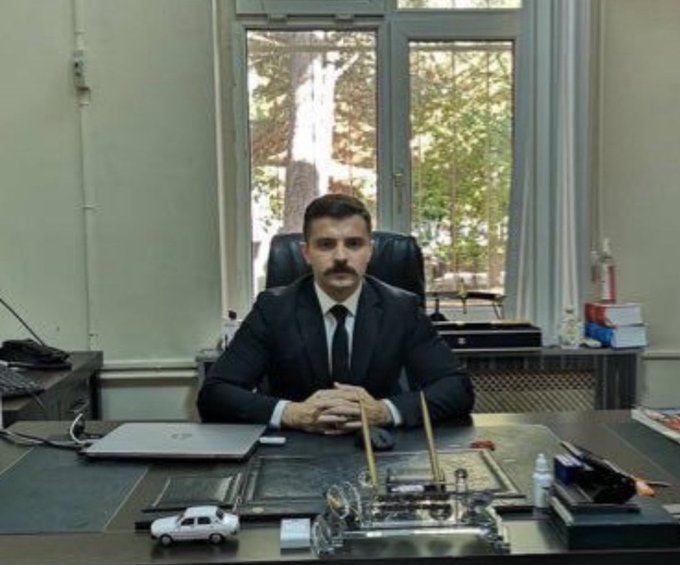
One of the prosecutors overseeing the case against Istanbul Mayor Ekrem İmamoğlu has come under fire after CHP Chair Özgür Özel revealed that the prosecutor displays a model of a Beyaz Toros—a car widely associated with disappearances and state violence in the 1990s. İmamoğlu, who has been held at Silivri Prison since his March 19 arrest, recounted the incident during an interview with journalist Ruşen Çakır of Medyascope as he visited the Istanbul Mayor in prison. İmamoğlu said the prosecutor, who took his testimony following the sweeping police operation, placed a symbolic image of the white Renault Toros on his desk and ended the interrogation by saying: “Tomorrow you become president, then you judge us.”
Four staff members of the satirical magazine Leman were arrested after a cartoon accused of insulting religious values triggered violent protests in Istanbul and drew sharp reactions from across the political spectrum.
In Turkey’s grand narrative, Izmir is the perennial contrarian. While Ankara governs and Istanbul dazzles, Izmir lounges by the Aegean, sipping its coffee with a secular smirk. Affectionately dubbed “Güzel İzmir” (Beautiful Izmir) by admirers and “Gavur İzmir” (Infidel Izmir) by detractors, the city has long been a cultural outlier—a place where minarets share the skyline with bell towers, and where the sea breeze carries whispers of both rebellion and repose.
Former HDP Co-Chair Mithat Sancar described the government’s “Terror-Free Turkey” initiative as unique, “a process that differs from global conflict resolution practices. If successful, it will enter the world’s academic literature,” he said.
Bülent Arınç. Most recently, he stirred controversy with his criticism of the cancellation of Ekrem İmamoğlu’s diploma and his detention. “Neighborhood” has become a widely used concept that reflects the deep polarization in Turkish politics. There’s an “AKP neighborhood,” we say, and there’s an “opposition neighborhood.” But with his remarks, which carried a tone of self-criticism, Arınç managed to draw a backlash from both his own neighborhood and its direct opposite. For those who know him, Arınç’s remarks came as no surprise. Throughout the AKP’s 23 years in power, he has been one of the few — perhaps the only — figures to voice such open dissent from within. Why? He puts it this way: “I have a certain weight of my own. I’m not like the others.”