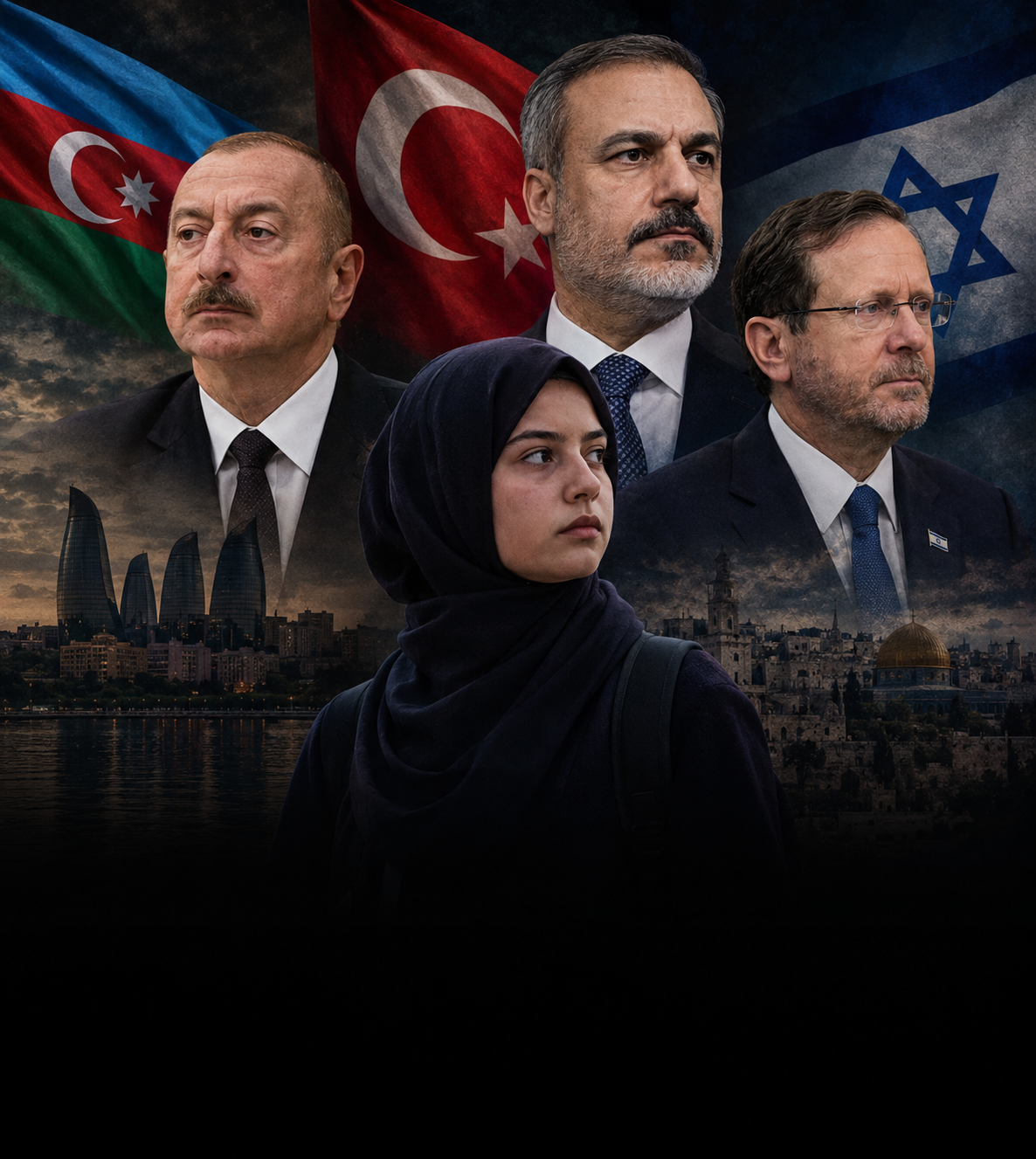
ONE NATION, TWO STATES, GROWING DISTANCE
For decades, Turkish foreign policy in the Caucasus rested on a single, unshakeable motto set by former Azerbaijani President Heydar Aliyev: 'One nation, two states.'
Analysis
Smart, independent reporting on Turkey's politics, economy and foreign affairs.
For decades, Turkish foreign policy in the Caucasus rested on a single, unshakeable motto set by former Azerbaijani President Heydar Aliyev: 'One nation, two states.'

In political terms, the conflict between Armenia and Azerbaijan is over, but in the socio-psychological dimension, it continues, according to the Armenian prime minister. 'When I talk about peace, it seems strange and even alien to many. Peace is an unfamiliar concept for Armenia and Azerbaijan,' Nikol Pashinyan said Nov. 4 at the annual forum of the Orbeli Center, which operates under the Prime Ministry.

Turkish democracy is the casualty of Europe’s rediscovery of Turkey’s strategic value. To better understand the context of German Chancellor Friedrich Merz’s visit to Ankara next week, one has to go back to the end of the Cold War. Whereas European countries have benefited from the peace dividend, the contrary happened for Turkey in the aftermath of the fall of the Iron Curtain. After enjoying the relative stability of the bipolar order of the Cold War era, Turkey found itself in the midst of several conflict zones. While most European countries downsized their defense budgets, Turkey had no such luxury. The fight against separatist terrorism, the turbulence created by the Gulf War, and regional conflicts like the ones in the Caucasus dictated the maintenance of a big and well-equipped army.
The Caucasus is undergoing a fundamental transformation that could reshape the region’s geopolitical landscape. After decades of failed attempts—such as the 2001 peace process between Armenia and Azerbaijan or the 2009 Armenia–Turkey Zurich Protocols—Armenia and Azerbaijan have now initialed agreements that could pave the way for a historic breakthrough.

After the Middle East, Russia is losing its standing in the Caucasus, reads the headline of the article penned by a prominent Turkish journalist who is an expert on Russian issues. The article is referring to press reports that Armenia and Azerbaijan are close to an agreement on the Zangezur corridor which will also facilitate the signing of a permanent peace agreement between the two neighbors.

The leaders of Turkey and Azerbaijan reiterated the good relations between the two countries in front of the cameras on March 5 in Ankara, while opening a new pipeline connecting Turkey to Azerbaijan’s Nakhchivan Autonomous Republic. Yet, while the two do indeed enjoy good relations, they do not see eye-to-eye in their visions for regional peace in the Caucasus.
Azerbaijan has lost an important opportunity to promote its image on the international stage by delaying a peace deal with Armenia ahead of the COP29 summit in Baku. While experts familiar with the negotiations believe important progress has been made, Baku’s request for changes to the Armenian constitution has become a new obstacle before a final deal.